Subscription Billing
Discover the top SaaS finance trends for 2026. CFOs and experts share unfiltered insights on AI, pricing, FP&A, GTM engineering, and the future of finance.

What will define SaaS finance in 2026? According to leading SaaS CFOs, operators, pricing experts, and revenue leaders, the coming year will be shaped by AI-native finance organizations, real-time forecasting, pricing innovation, data governance, and a renewed focus on sustainable growth.
To eliminate generic “trend lists” and hype-driven noise, we asked 11 highly respected SaaS experts to share their unfiltered, uncensored predictions for 2026. Their insights highlight what finance leaders must prepare for and how the finance function will evolve as AI reshapes the operating model.
Common themes emerged across all perspectives:
- Finance will shift from reactive reporting to predictive, real-time intelligence
- CFOs will take ownership of data quality, AI governance, and decision infrastructure
- Pricing will become more nuanced, usage-based, and tied to value
- GTM Engineering and operational excellence will redefine efficiency
- FP&A teams will need deeper business knowledge AND stronger technical skills
- Sustainable growth and strong fundamentals will outperform hype cycles
This article brings you frontline predictions, highlighting key insights from each expert’s area of expertise.
For a structured strategic view, see our report: SaaS Finance Outlook 2026: Key Trends for Finance Teams.
Now let’s dive into what the experts say.
Expert Predictions for SaaS Finance in 2026
1. AI + Operational Excellence Will Redefine Performance
Dave Leaver, CFO at Mention Me
Seasoned SaaS finance leader with 20+ years of experience, currently serving as CFO at Mention Me, where he drives operational excellence, AI-enabled decision making, and strategic growth initiatives for high-growth subscription businesses.

“I believe the defining trend will be the convergence of operational excellence with AI-enabled decision-making. We’re entering a world where good SaaS companies with $20M+ ARR, solid retention, and decent growth, no longer have a default exit path. That means finance teams must drive performance that creates competitive differentiation in a crowded field: profitable growth, vertical depth, and AI augmentation. To succeed in that environment, finance must be more than guardians of cash, we must be business designers. Whether that’s identifying M&A tuck-in opportunities, building forecast engines around AI impact, or optimising GTM investment by customer segment, the most successful teams need to operate like internal strategic firms.
AI will be the enabler, but judgment, velocity, and cross-functional collaboration will be the differentiators. The best finance teams will orchestrate this convergence, to create a high-performing operating model.”
2. GTM Engineering Will Become a Core Business Function
Martijn Plessers, Co-Founder of BONANA
Experienced SaaS operator & Co-founder of BONAN. Builds automated, data-driven GTM systems that improve efficiency and scalability. Combines business insight with technical skill to help SaaS companies grow more predictably with far less manual effort.

“I expect that Go-to-Market Engineering will become a core business function. The winners will combine business savvy with technical skills — building automated, data-driven GTM systems that operate constantly.
Instead of hiring more people, SaaS companies will grow through standardized workflows, AI-driven insights, and proactive triggers for pipeline, expansion, and retention. This change will blur the lines between RevOps, Marketing, Sales & CS and redefine how we measure efficiency.”
3. Flexible Revenue Management Will Shape Pricing in 2026
Sanne van Deudekom, Revenue Director at Blinqx
Revenue Director at Blinqx, specialized in SaaS pricing and an enthusiast for automated revenue management tooling. Co-Leads the transition from manual billing systems to scalable, usage-driven models, enabling SaaS companies to charge accurately and scale efficiently.

“One key trend that will shape how SaaS finance teams manage pricing in 2026 is the need for flexible revenue management tooling. We are in the midst of this process ourselves: to allow us to invoice our usage-based products in an automated, scalable manner, we needed to transition to a new revenue management tool. This helps us to track usage of the products, translate that to the correct credit allocations and subsequent price models, and as a result charge all of our customers correctly – all without any need for manual intervention.“
4. AI Roll-Ups Will Accelerate Industry Consolidation
Rita Lei, Partner at MCF Corporate Finance
Partner and Head of Technology at MCF Corporate Finance, bringing 15+ years of experience in SaaS & tech M&A across Europe and the US. Holds a BA from Cambridge and a PhD from the Sainsbury Laboratory.

“As the IPO market appears more promising in 2026, I expect increased investor optimism and greater capital deployment, while SaaS valuations will hold steady. Profitable growth remains a key valuation driver (the rule of 40+), and vertical SaaS, particularly those targeting underserved sectors, will continue to be a key focus area for investors.
At the same time, investors expect to see AI used even more than before to drive revenue and reduce costs—this is becoming one of the first questions they ask. Companies that achieve outstanding growth with AI, primarily through proprietary data and algorithms, will have a defensible moat and attract investors’ attention.
When it comes to a significant trend that will shape successful SaaS exits or fundraising strategies in 2026, I expect to see major AI roll-ups (proprietary AI combined with existing customer bases).”
5. FP&A Will Require More Technical Skills and Business Partnership
Paul Barnhurst, Founder of The FP&A Guy
Founder of The FP&A Guy. 10+ years of FP&A experience across multiple industries and now equips finance teams with advanced modelling, partnering, and strategic-insight skills through training, podcasts, and consulting.

“I do not see a major evolution in the roles of finance and FP&A teams in 2026. I see a continuation of learning to work with large data sets, figuring out how best to leverage AI, and continued pressure to help the business make better, faster decisions. In the next few years, we will continue to see the CFO role expand, and finance in general will be expected to play a larger operational role.
Some key trends I expect to see related to FP&A in 2026:
- More and more roles will expect people to have BI and SQL skills; the amount of data we are expected to work with will only increase.
- The best FP&A professionals will continue to be those who understand the business deeply and can partner and influence the direction of the business.
- The need for FP&A-specific training will continue to grow in 2026, much like it did in 2025.”
6. Pricing Will Shift Toward “Careful Complexity”
Marcos Rivera, CEO at Pricing I/O
Founder and CEO of Pricing I/O has 20+ years of SaaS pricing and monetization experience, from his work at Vista Equity Partners to leading hundreds of pricing launches. Helps SaaS leaders develop and defend value-based and usage-driven models.

“The one key trend shaping SaaS pricing and packaging in 2026 is what I call "Careful Complexity."
- Simple pricing is great, but simple is not always optimal.
- And complex doesn’t always mean confusing.
SaaS leaders—and their customers—will learn to embrace pricing models that present more than one number, but in ways that are still intuitive and easy to understand. Companies like OpenAI, Salesforce, and Intercom are leading the way in educating customers on rate limits, flex credits, and outcome-based pricing. Customers want pricing that is fair, flexible, and transparent. But as the value SaaS products deliver expands in both depth and breadth, so must the monetization model.
To prepare, SaaS leaders must:
- Stop relying on vague, outdated ICPs and start digging deeper into customer behavior at the job-to-be-done level.
- Ditch frail, brittle billing systems that limit the ability to charge for real value. The billing infrastructure landscape has matured significantly in the last three years, with more interoperable, plug-and-play options available than ever before. It’s time to take off the handcuffs.
The path is clear: → Get the right customer data, → Dig deep into usage, → Add dimensions to monetization, → Upgrade billing infrastructure.
Walking that path will take investment, alignment, and courage. But bold times require bold measures and 2026 will be a bold time for SaaS.”
7. AI-Powered Finance Will Redefine the CFO Role
Linda Nordstrand, CFO at Inexchange
CFO at Inexchange, specializes in building scalale finance operations, robust data integrity frameworks and strategic decision support for subscription-led businesses, positioning finance as a key partner in SaaS growth.

“I’m convinced that we’ve only seen the very beginning of what AI can do for finance. Many finance teams haven’t yet unlocked its full potential — often because foundational elements like data quality and system integration still need work.
AI is moving finance from a function that reports what happened to one that predicts what will happen — and guides the business on what to do next. This means CFOs will increasingly be responsible not just for numbers, but for the integrity, governance, and strategic use of the data and AI systems that generate those insights.
The CFO will have great responsibility in ensuring that every major decision is grounded in high-quality data, transparent models, and AI-driven foresight. Finance teams, in turn, will evolve from process managers to insight creators — spending less time on manual work and more time shaping strategy. In short, the biggest trend of 2026 will be the acceleration of AI-powered finance.”
8. Finance Will Finally Run in Real Time
Luc Hancock, Head of Community at CFO Connect (a community by Spendesk)
Head of Community at CFO Connect, builds peer-driven finance communities. Supports CFOs in areas like forecasting, tech stacks, and strategic decision-making, helping them become more agile, insight-driven partners.

“If there's one big trend I'm seeing emerge for CFOs in 2026, it's this: finance will finally run in real time.
No more waiting for the monthly close or quarterly board pack. AI copilots will keep the numbers (and the narrative) up to date 24/7. Forecasts will adjust automatically. Variances will explain themselves. And CFOs will spend less time reporting what happened, and more time deciding what to do next.
We're already seeing this shift in our community. Platforms are consolidating live data from ERPs, CRMs, and HR systems. Tools like Spendesk are layering conversational AI on top, so you can just ask your finance stack, "What's driving our burn rate this week?" or "How would a 10% pricing increase hit gross margin?"
This changes everything. Finance stops being reactive and becomes the company's early-warning system, predicting issues before they appear in the numbers. The smartest CFOs I work with are using this to move faster, reallocate capital dynamically, and guide strategy with precision that used to take weeks of analysis.
It also means a cultural reset. The most successful finance teams won't be the ones that master spreadsheets. They'll be the ones that master experimentation, testing and learning with AI every day. I see this mindset shift happening in real time.
So if 2025 was about dabbling in AI tools, 2026 will be about operating like an AI-native finance team: where insights flow in real time, decisions happen faster, and finance becomes the engine of strategic momentum.”
9. CFO Tech Stacks Will Become Fit for Purpose
Nora Tandberg, CFO at Orbyt
CFO at Orbyt (formerly in audit and deal advisory at PwC), leading the finance function for a global SaaS company, specialising in strategic planning, growth financing, and data-driven decision-making for fast-scaling subscription businesses.
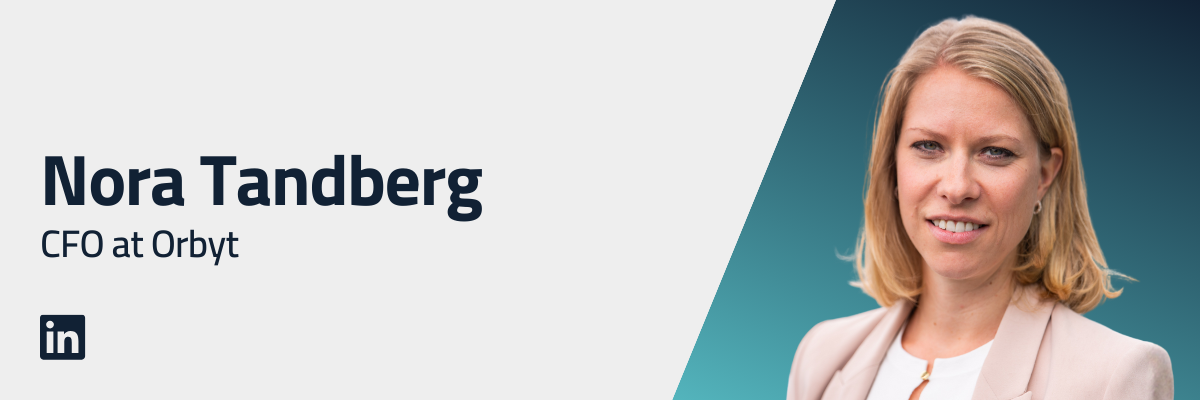
“The CFO role is increasingly seen as strategic and business centric rather than a support function, and this is a trend that will continue in 2026. As a result, CFOs must build fit for purpose processes supported by tech stacks tailored to the needs of their business.
Whatever the business KPIs, the CFO tech stack needs to enable measurement and improvement of the metrics that matter most. E.g. for quote-to-cash performance, CFOs could select the part of this process that needs the most focus for their business and invest in the right tools to improve it. E.g. if too much time is lost on pricing, they could invest in a good CPQ tool, whereas if the real headache is high DSO, tailored billing and invoice distribution software can significantly improve this metric.”
10. Successful SaaS Companies Will Balance Hype With Fundamentals
Christian (CJ) Jessen, CFO & Advisor at CFO Services
Pragmatic CFO with hands-on experience scaling companies from Seed to Series B and more than a decade in finance. He advises founders on fundraising, capital allocation, and GTM efficiency to drive disciplined hyper-growth.

“There is definitely a trend of balancing hype versus fundamental business. It is choppy waters for old-school SaaS, but despite the narrative that “T2D3 is dead,” I would still pick a business compounding at 100% year over year, AI-native or not. Sustainable growth and good business mechanics haven’t gone out of style.
So I think the most successful SaaS companies coming out of 2026 will be those who have navigated the choppy waters without going all in on either direction.
AI is important, but those leaning too strongly into the hype will end up capsizing. And those not leaning in at all will be left behind. But stick to sustainable growth and building a good business, then you’ll most likely still stand when the tide goes out again.”
11. High-Performing Finance Teams Will Be Forward-Looking
Carl Seidman, Founder of Seidman Financial
Business advisor, educator, and Founder of Seidman Financial. Supports mid-market and Fortune 500 finance teams in strengthening FP&A, modernizing planning, and improving decision-making, with a focus on building forward-looking, insight-driven finance functions.

“For FP&A and finance professionals, staying impactful in an AI-driven, fast-changing 2026 landscape means staying relevant. Staying relevant means not assuming that the skills you have now will matter in 5 years. That means the most important skills are the ability to learn, adapt, and influence. AI is unlikely to catch up with us in those areas.
The best teams I work with are always forward-thinking, aren't complacent, and don't want their people to do what they did 10 years ago. Finance is in the control tower—it's an early-warning system that offers visibility into all the other functions of the business. If finance isn't actively doing that, it's not high-performing."
Closing Thoughts: What These Trends Mean for SaaS Finance in 2026
These expert predictions reveal a SaaS finance landscape undergoing rapid transformation. AI will fundamentally reshape forecasting and analysis, pricing will become more dynamic and value-driven, and CFOs will take on a far more strategic and data-centric role.
Across all perspectives, 2026 will reward finance teams that:
- Embrace AI-native operations
- Build fit-for-purpose tech stacks
- Master real-time insight generation
- Innovate on pricing and monetization
- Prioritize sustainable growth over hype
- Operate as strategic partners, not just reporting functions
This collection gives you the candid, real-world foresight from industry leaders.
For structured analysis, practical frameworks, and execution-ready guidance, explore our report:
SaaS Finance Outlook 2026: Key Trends for Finance Teams
Together, these resources provide everything finance leaders need to navigate 2026 with clarity and confidence.
FAQ
Q1. What are the top SaaS finance trends for 2026?
Experts expect major shifts toward AI-native finance teams, real-time forecasting, flexible pricing models, GTM engineering, stronger FP&A skills, and sustainable growth.
Q2. How will AI influence the CFO role in 2026?
AI will turn CFOs into data and AI governance leaders, responsible for ensuring decisions are guided by high-quality, transparent, predictive insights.
Q3. What pricing trends will shape SaaS in 2026?
Usage-based models, flex credits, outcome-based pricing, and multi-dimensional pricing structures rooted in customer behavior.
Q4. What technical skills will FP&A teams need?
BI tools, SQL, automation fluency, and strong business partnership capabilities.
Q5. What defines a high-performing finance team in 2026?
Forward-looking analysis, experimentation with AI, cross-functional alignment, and acting as a company-wide early-warning system.
Q6: Why do SaaS companies struggle with disconnected systems?
Most SaaS companies grow faster than their systems can keep up. As a result, finance, sales, CS, and product end up using separate tools that don’t share data. This leads to:
- conflicting ARR/MRR numbers
- manual reconciliation
- spreadsheet dependency
- delays in reporting and forecasting
Disconnected systems create data silos — the single biggest barrier to predictable, scalable recurring revenue.
Q7: What does “one source of truth” mean in SaaS revenue operations?
A “single source of truth” means all teams operate using the same subscription, revenue, and customer data, updated in real time. For SaaS companies, this ensures:
- consistent MRR, churn, and revenue data
- accurate forecasting
- fewer revenue leaks
- faster financial closes
When every system pulls from one unified dataset, collaboration and decision-making accelerate.
Q8: How does subscription complexity impact financial reporting?
Subscription changes such as upgrades, downgrades, usage-based billing, and mid-term amendments introduce constant variability. Without automation, this causes:
- inconsistent revenue recognition
- versioning issues across orders
- delayed billing
- audit risks
Accurate SaaS reporting requires real-time synchronization between CRM, ERP, and subscription systems.
Q9: How does Younium support usage-based and hybrid billing models?
Younium ingests usage data in real time and calculates charges automatically. This ensures:
- accurate billing
- transparent invoicing
- no missed usage
- correct revenue recognition tied to consumption
Usage-based SaaS businesses gain predictable reporting on inherently variable revenue models.
Q10: How does Younium integrate with existing SaaS tech stacks?
Younium uses an API-first architecture with ready-built connectors for:
- CRM (Salesforce, HubSpot)
- ERP (NetSuite, Microsoft Dynamics, Visma)
- BI tools (Power BI, Tableau)
This eliminates custom integrations and reduces maintenance overhead for tech teams.
Q11: How does Younium strengthen cross-functional alignment?
With shared dashboards and unified subscription data, every team — finance, RevOps, product, tech — works from the same numbers. This improves:
- forecasting accuracy
- renewal and expansion planning
- reporting consistency
- operational efficiency
Aligned data = aligned decisions = aligned growth.