Metrics & Reporting
Compare the best CPQ solutions for SaaS businesses that help manage pricing complexity, reduce revenue risk, and support pricing and quoting.
The right CPQ solution solves the problem of pricing complexity for SaaS businesses.
As SaaS companies grow, pricing models often become harder to manage. What starts as a simple subscription can expand into tiers and custom contract terms.
When this happens, quotes and pricing decisions become harder to standardize across teams.
CPQ software like Younium exists to bring structure to this stage of growth. It sets rules for how SaaS businesses configure products, handle pricing, and approvals.
In this guide, we’ll review nine CPQ platforms SaaS teams can use in 2026 and beyond. You’ll learn what to look for and how CPQ fits into a scalable revenue stack. This page focuses on B2B SaaS companies with recurring, subscription-based pricing – the kind of revenue model where a quote can include ramp terms, usage components, and mid-term changes rather than a one-time price.
One name you won’t find on this list is Salesforce CPQ, which Salesforce moved to End of Sale on March 27, 2025. That ended new sign-ups and feature development, with new buyers directed toward Revenue Cloud Advanced instead. Although existing customers can continue using Salesforce CPQ because no end-of-life date has been announced, it’s important to recognize where Salesforce is now directing its investment.
Before diving in, it’s also useful to understand that CPQ tools broadly fall into two camps: those designed to configure physical products with thousands of variants (manufacturing and engineer-to-order goods), and those designed to price recurring, usage-based, and subscription revenue.
If you’re managing SaaS subscriptions rather than assembly lines, the second camp (starting with Younium below) is where you’ll want to focus.
Here’s a quick comparison before we go deep on each platform.
|
Platform |
Use case |
Pricing model |
|
Younium |
B2B SaaS recurring revenue and quote-to-cash |
Quoted on request, tied to recurring revenue |
|
QuoteWerks |
IT resellers and MSPs quoting from distributor catalogs |
From $50 per concurrent user/month |
|
Conga CPQ |
Enterprises needing CPQ plus contract lifecycle management |
Custom pricing |
|
DealHub CPQ |
Mid-market and high-growth B2B SaaS sales teams |
Custom pricing |
|
Nue |
Salesforce-native teams wanting subscription-aware quoting |
Custom pricing |
|
Oracle CPQ |
Global enterprises with very large catalogs |
Custom pricing |
|
Experlogix CPQ |
Engineer-to-order and configure-to-order manufacturers |
Custom pricing |
|
SAP CPQ |
Organizations running an SAP ERP backbone |
From $98 per user/month; minimum 50 users |
|
PandaDoc CPQ |
SMB and proposal-first teams |
Free plan; paid plans from $19 per seat/month, billed annually |
What are CPQ (Configure, Price, Quote) Solutions?
CPQ solutions are software tools that help businesses create clear and correct quotes.
They do this by controlling how a SaaS product gets configured, priced, and approved. Instead of using messy spreadsheets or guessing prices, the process moves through three clear stages.
First comes the configuration stage. CPQ only lets teams choose product options that actually work together, which cuts out invalid combinations and the back-and-forth between sales and operations that comes with catching them late.
Pricing comes next. The system applies your company’s pricing rules automatically, calculating prices from plan tier, usage, discounts, and contract terms. No one has to do manual math, which keeps pricing fair and consistent across teams.
The final stage turns all of this into a clean, customer-ready proposal, routed to the right approvers before it ever reaches the customer. This approval step keeps deals moving without the delays or compliance risks that can come from sending out an unapproved quote.
Why Do Businesses Need CPQ Solutions?
If you struggle with inconsistent pricing that slows down your sales, you need a CPQ solution. Here’s how the right one helps:
-
Standardizing Pricing Rules: CPQ solutions apply the same pricing rules to every quote, no matter who creates it. This keeps pricing consistent across teams. This reduces confusion as the business grows.
-
Handling Complex Pricing: Pricing can include tiers, usage, and add-ons. A strong CPQ tool keeps all pricing rules in one place. This allows sales teams to build accurate quotes without relying on workarounds.
-
Improving Sales Efficiency: Sales teams spend less time fixing quotes and more time closing deals. CPQ removes friction by guiding reps through approved product options and prices.
-
Speeding Up Approvals: Solid CPQ platforms include built-in approval workflows. Quotes automatically go to the right manager at the right time. This reduces delays and keeps deals moving.
-
Reducing Revenue Leakage: CPQ solutions enforce discount limits and pricing rules for quotes. This makes sure all charges are included before a quote goes out. It also prevents revenue leakage as pricing becomes more complex.
-
Supporting Scalable Growth: As deal volume grows, manual quoting becomes hard to manage. CPQ gives teams a clear and repeatable process. It helps them grow without losing control over pricing.
For SaaS companies, this matters because revenue operations are recurring. A mistake in a quote can affect billing for months or even years. A well-implemented CPQ solution reduces that risk by putting clear rules in place from the start.
Many B2B SaaS companies deal with complex pricing and contract terms. Tools like Younium can help with that. That’s why it’s one of the best CPQ solutions. Younium supports businesses that need structured pricing, approvals, and visibility across teams.
In short, CPQ solutions make quoting accurate and easier to manage as a business grows.
How Does the Structure of a Quote Decide the Revenue Schedule?
The structure of a quote decides the revenue schedule because it gives finance a clear record of exactly what was sold, when, and on what terms – so the recognition schedule can be built directly from those same details. A well-structured quote gives your finance team a reliable basis for recognizing revenue under ASC 606 (or IFRS 15 for teams reporting internationally), rather than having to reconstruct the original intent from an invoice after the fact.
A revenue-schedule-ready quote typically captures:
-
Clear line items tied to specific products or services.
-
Contract start, end, and renewal dates.
-
Proration, ramp, and usage terms across the life of the contract.
Once a quote is approved, that same structured data carries through to the order it creates and the revenue schedule finance runs from it – helping keep mid-term changes and renewals audit-ready under IFRS 15 or ASC 606, rather than leaving finance to reconstruct the details after the fact.
9 Best CPQ Solutions for SaaS Businesses
Below is a curated list of nine standout CPQ platforms. The tools support different SaaS pricing models and operational needs.
1. Younium
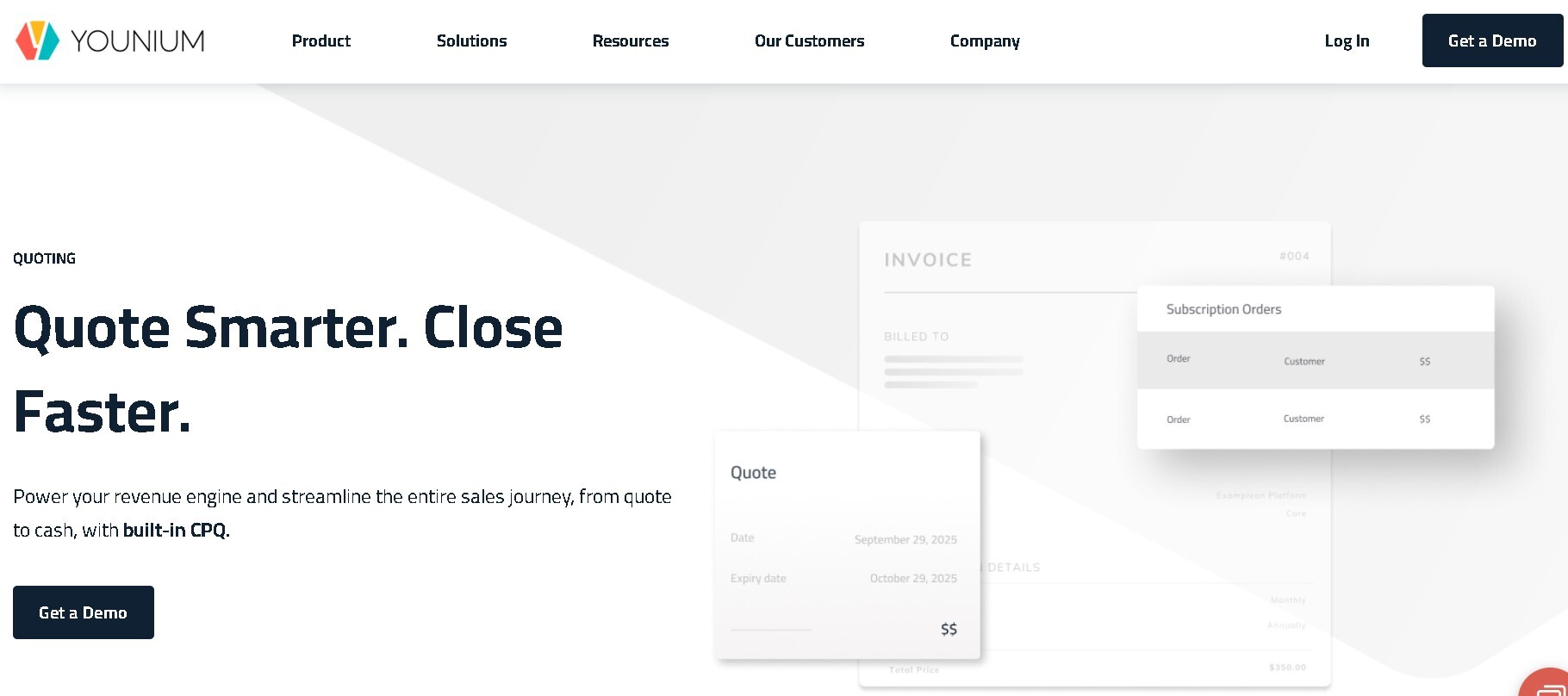
Image via Younium
Younium is one of the best CPQ solutions for B2B SaaS businesses that manage recurring revenue. It offers a full quote-to-cash suite. This includes invoicing, billing, and subscription management.
Many CPQ tools stop after creating a quote. Younium goes further.
It connects product setup, pricing, billing, subscriptions, and financial reporting in one system. This ensures that sales and finance teams have a single source of truth. This reduces confusion and avoids manual handoffs.
With Younium CPQ, sales teams can create accurate quotes. They follow approved subscription pricing rules and product setups. This reduces errors that occur when teams use different tools.
It also has built-in approval workflows and role-based access. Quotes go to the right people based on deal size and contract terms. Once approved, the quote automatically generates the subscription order that billing and the revenue schedule are built from.
Younium also tracks subscription renewals, upgrades, and expansions in real time. Finance teams can see revenue forecasts and manage collections without switching tools. It supports both self-serve and enterprise sales models.
For B2B SaaS companies managing hybrid growth, Younium offers the best CPQ solutions. It handles upgrades, upsells, and expansions while keeping pricing and billing accurate.
Something worth knowing before you compare it to the rest of this list is that Younium CPQ is a module within the broader Younium platform. As such, it’s designed specifically for that environment, rather than as a bill-of-materials or manufacturing configurator, a document-design tool, or a Salesforce-native app.
Key Features
-
Applies standardized pricing rules so every quote follows approved logic across teams.
-
Supports complex subscription pricing models, including recurring charges, tiers, add-ons, and usage-based components.
-
Enables built-in approval workflows that route quotes to stakeholders based on contract terms.
-
Offers customizable, on-brand quote templates tailored to different customer segments and pricing strategies.
-
Integrates with CRM systems to ensure automated data flow across sales and finance.
-
Supports upsells, cross-sells, and contract expansions without breaking existing pricing or subscription structures.
-
Delivers clear visibility into contract data and subscription metrics for better forecasting and decision-making.
Pricing
-
Younium offers custom pricing based on company size, use cases, and required modules.
2. QuoteWerks
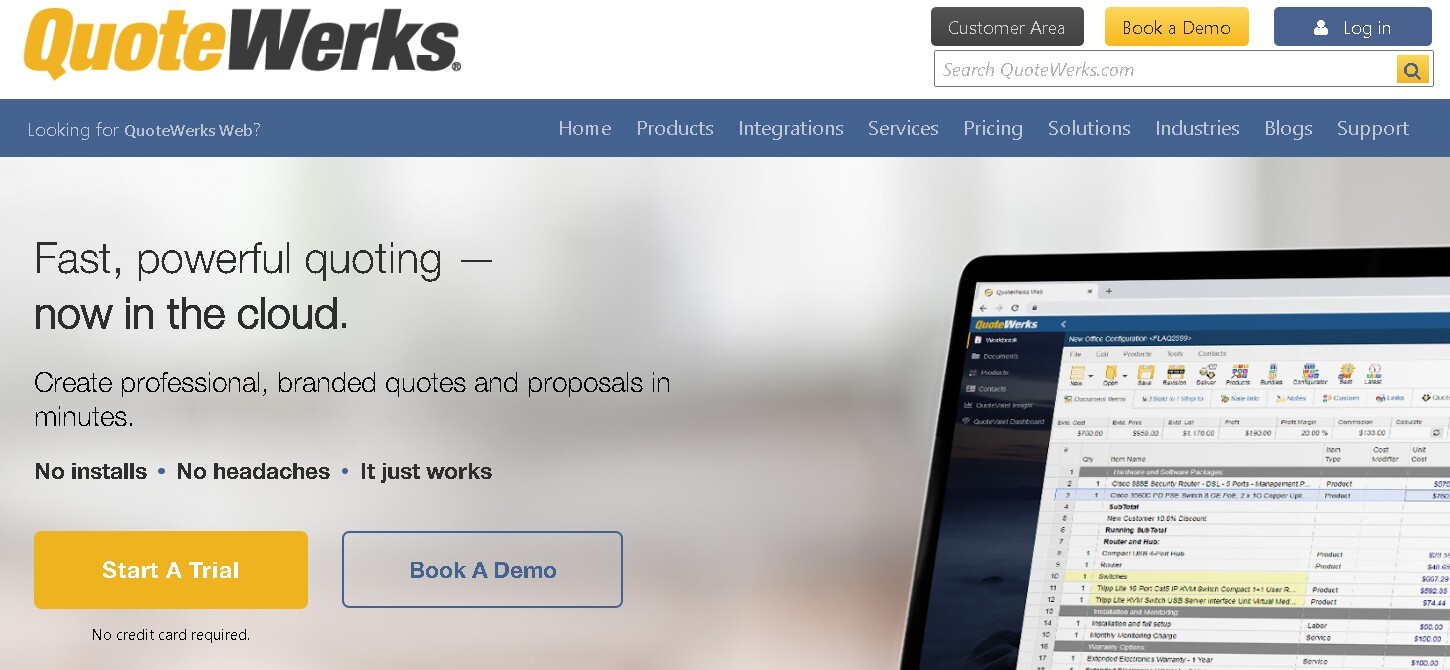
Image via QuoteWerks
QuoteWerks connects sales teams to live product data across large catalogs and distributor networks, which makes it a fit for companies with large catalogs or many vendors and distributors.
The platform connects to product data sources. This lets sales teams compare costs and build quotes using current market information.
It includes electronic signature and payment collection to help close deals faster. Customers can review and approve quotes in the same system. They can also complete payments without switching tools. This shortens the time between agreement and revenue.
The platform also gives sales teams visibility into customer engagement with quotes. Sales reps can see when customers open a quote, the sections they review, and when a customer is ready to approve or pay.
Like most CPQ solutions, it supports integration with CRM, accounting, and shipping platforms. These integrations allow quote data to flow into downstream systems without re-entry. This helps reduce errors and administrative workload.
Key Features
-
Delivers real-time consumer price comparisons pulled from sources like Amazon, CDW, and Staples.
-
Allows quote tracking that shows when customers view quotes or take action.
-
Enables electronic signature functionality that allows customers to approve quotes.
-
Supports integrated payment collection, including ACH transactions, to speed up deal closure.
-
Provides customizable quote and proposal templates for consistent, professional, on-brand documents.
-
Offers centralized product and service management that supports price bundles and configurable offerings.
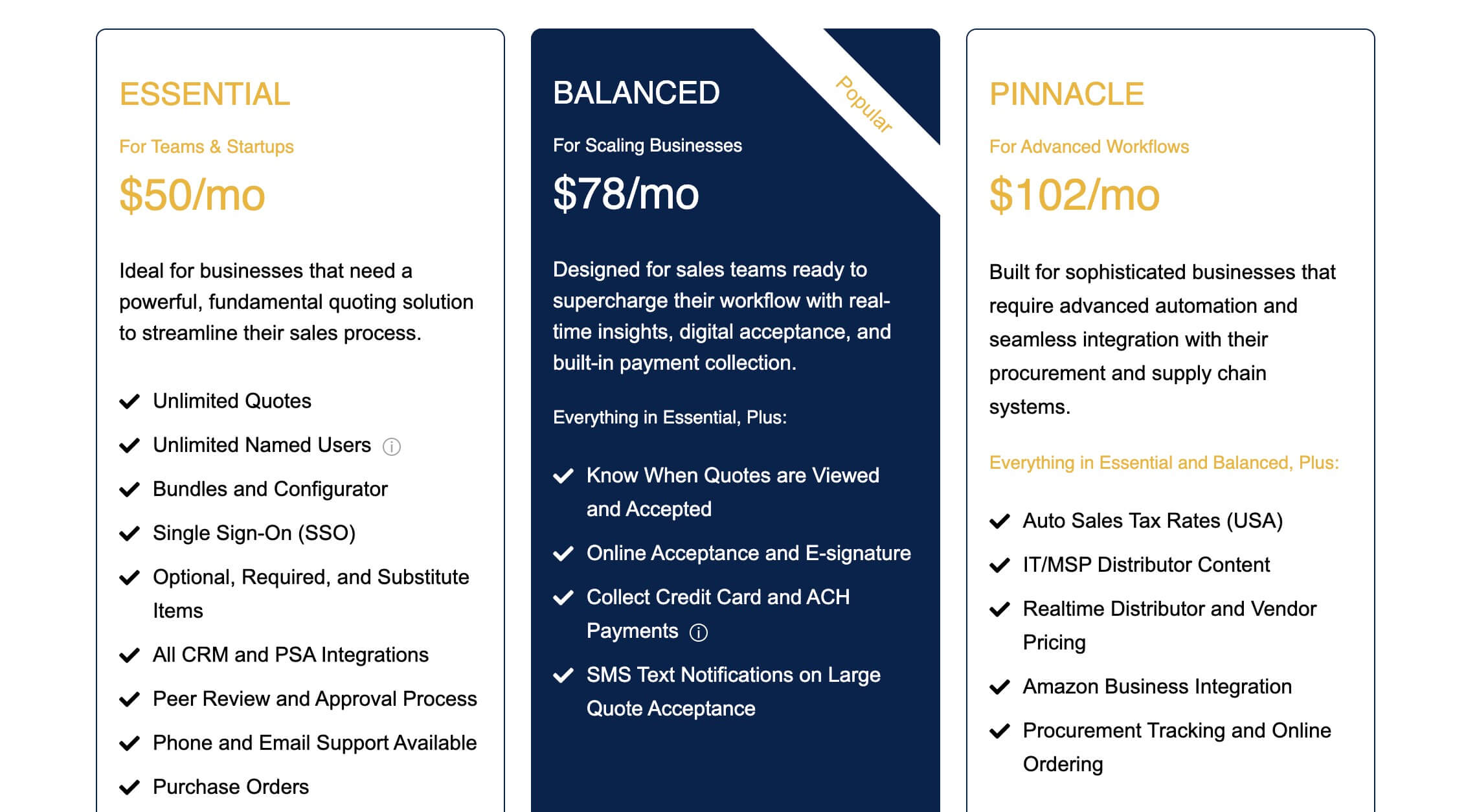
Pricing
-
Essential: $50/concurrent user/month
-
Balanced: $78/concurrent user/month
-
Pinnacle: $102/concurrent user/month
3. Conga
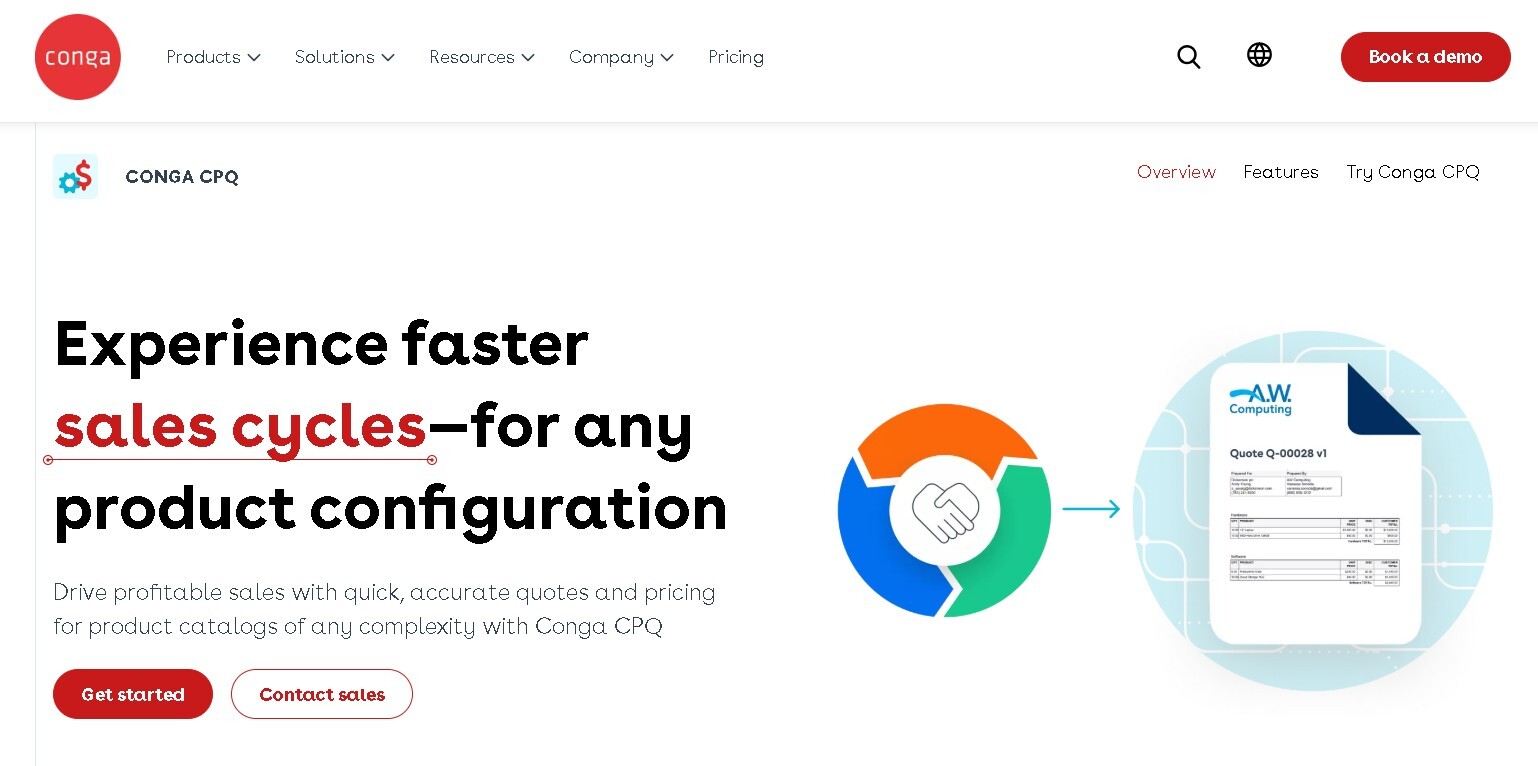
Image via Conga
Conga CPQ targets companies that want control over the entire quote-to-cash lifecycle.
The platform supports quoting for tangible goods and professional services. It also handles software subscriptions and usage-based models within a unified product catalog. Teams no longer need separate systems for each revenue type. They can combine all products and services into one single quote.
Conga CPQ syncs with contract management tools to keep records accurate and updated. It also connects billing systems within the Conga ecosystem for smoother revenue processes. Teams can convert quotes into approved proposals, contracts, and invoices without re-entering data.
Conga completed its acquisition of PROS’s B2B business on February 2, 2026, bringing PROS’s pricing and rebate-management capabilities under the Conga umbrella (the deal excludes PROS’s travel business).
The platform also keeps subscriptions synchronized as changes occur. When terms or pricing change during negotiations, Conga CPQ updates the quote. It also updates all related downstream records at the same time.
Key Features
-
Allows bundling of many product types into a single quote for comprehensive solutions.
-
Updates subscription details when sales teams make changes during the sales process.
-
Maintains pricing accuracy through codified rules that reduce manual intervention.
-
Generates professional and branded quotes using built-in document automation.
-
Enables electronic approvals and signatures from the CPQ workflow.
-
Aligns contract terms with negotiated quote details to prevent discrepancies.
-
Integrates with broader revenue lifecycle management workflows.
Pricing
-
Conga CPQ offers custom pricing.
4. DealHub CPQ
Image via DealHub
DealHub CPQ targets revenue teams that manage several sales motions, handling complex pricing logic alongside approvals and contracts in a single, unified workflow.
One of DealHub CPQ’s strengths is its guided quote configuration. The platform guides sales reps through structured product options. It uses filters and rules that reflect how the business sells.
DealHub CPQ uses an adaptive pricebook. It supports fixed, tiered, and usage-based pricing in the same system. Teams can set pricing rules for each line item to prevent errors. This approach helps protect margins and ensures accurate pricing on every quote.
Organizations that sell through partners or indirect channels can use DealHub CPQ to include them in quoting. The platform sets clear pricing rules and approval limits for these partners.
Key Features
-
Supports fixed, tiered, and usage-based pricing within a single adaptive pricebook.
-
Enables quoting for new deals, subscription renewals, expansions, and amendments in one workflow.
-
Automates approval routing with parallel workflows and real-time collaboration.
-
Protects margins by enforcing pricing and discount thresholds at the line item level.
-
Centralizes deal oversight with a deal desk dashboard showing quote and approval status.
-
Enables API driven quote generation for self-service, ecommerce, and PLG use cases.
Pricing
-
Custom pricing
5. Nue
Image via Nue
Nue is an omnichannel quote-to-revenue platform built for modern SaaS growth models. It connects direct sales, self-serve, and PLG within a single unified engine.
One of Nue’s main features is Nue AI, which delivers context-specific RevOps automation for sales and finance teams. It helps teams quote, price, bill, and renew with precision.
It can suggest the best pricing for each deal based on real data. Plus, it checks for revenue growth risks and applies approval rules within the system.
It also has Salesforce native architecture, unlike most CPQ solutions. Sales teams can configure products, apply complex pricing logic, and send quotes within Salesforce.
Approved quotes flow into billing and SaaS analytics, reducing work for finance teams. This process improves ARR accuracy and ensures revenue data stays consistent across systems.
Key Features
-
Automates multi-step approval workflows to enforce SaaS pricing and discount policies.
-
Provides lifecycle intelligence that connects quoting activity to renewals and expansions.
-
Powers self-serve and in-product purchases through reliable APIs that align with direct sales data.
-
Supports partner and reseller pricing structures with controlled billing hierarchies.
-
Offers bidirectional integration and data sync with CRM, ERP, and payment systems to reduce system sprawl.
-
Supports hybrid pricing models, including subscriptions, usage-based charges, and in-app transactions.
Pricing
-
Custom pricing
6. Oracle CPQ
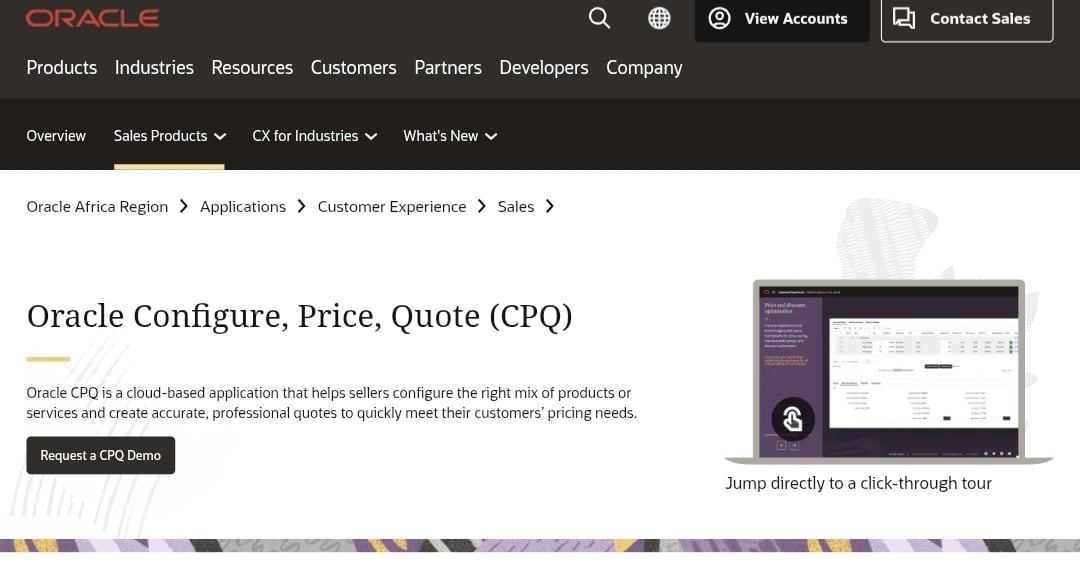
Image via Oracle
Oracle CPQ is designed for sales teams that handle configurable products and multi-tier pricing models. Its intelligent quoting capabilities guide reps through complex configurations.
Teams use its document generation to create proposals with their brand identity. They can also generate statements of work and contracts without extra manual work. It includes eSignature functionality to sign quotes and contracts without leaving the platform.
The platform also provides AI-driven finance management and selling. Sales reps follow guided steps to configure products for customers. The system suggests discount limits and pricing strategies using current sales and market data.
Oracle CPQ also streamlines deal management by providing predictive insights into win probability and margins. Teams can focus on opportunities and deals with the highest likelihood of success.
Key Features
-
Generates professional, branded proposals, contracts, and quote documents without manual effort.
-
Integrates with CRM, ERP, and subscription management systems for seamless data flow.
-
Offers predictive insights and deal scoring to help rank high-value opportunities.
-
Tracks version changes and maintains audit trails for all quotes and contracts.
-
Includes eSignature integration for faster contract approvals.
-
Supports multilingual document output and configurable templates.
Pricing
-
Custom pricing
7. Experlogix CPQ
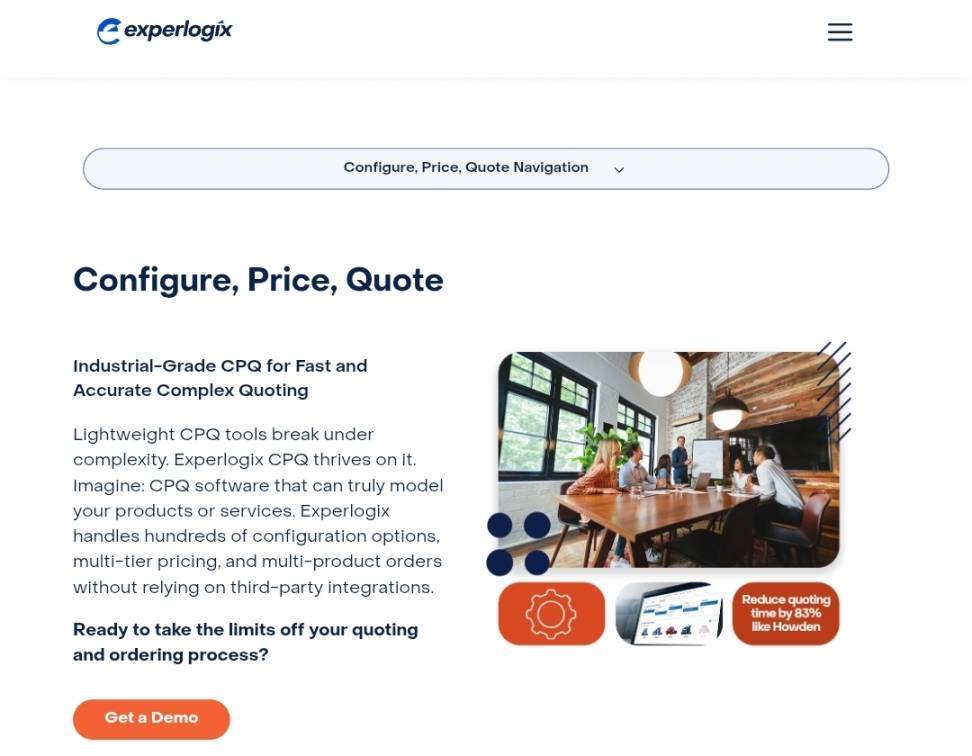
Image via Experlogix
Experlogix uses a real-time rules engine to check each product configuration for complex product portfolios ensuring every build follows internal policies and requirements.
Once the sales team configures and prices a product, CPQ routes the quote for approval. The system then turns the approved quote into a professional, ready-to-send document.
It includes advanced document automation via Experlogix Documents. It also generates quotes, proposals, and customer-facing documents using live CPQ and CRM data. Teams can customize documents and deliver through preferred customer channels for better engagement.
Experlogix CPQ connects with major CRM and ERP systems to track updates. Changes in these systems appear in the CPQ and keep quotes accurate.
Key Features
-
Validates product configurations in real time to prevent invalid builds.
-
Applies contract terms, pricing, and discount rules to quotes based on set policies.
-
Generates production-ready quotes with BOM (bill of materials) and routing data.
-
Integrates with CRM and ERP systems like Salesforce for operational alignment.
-
Supports complex product bundles and multi-level pricing structures.
Pricing
-
Custom pricing
8. SAP CPQ
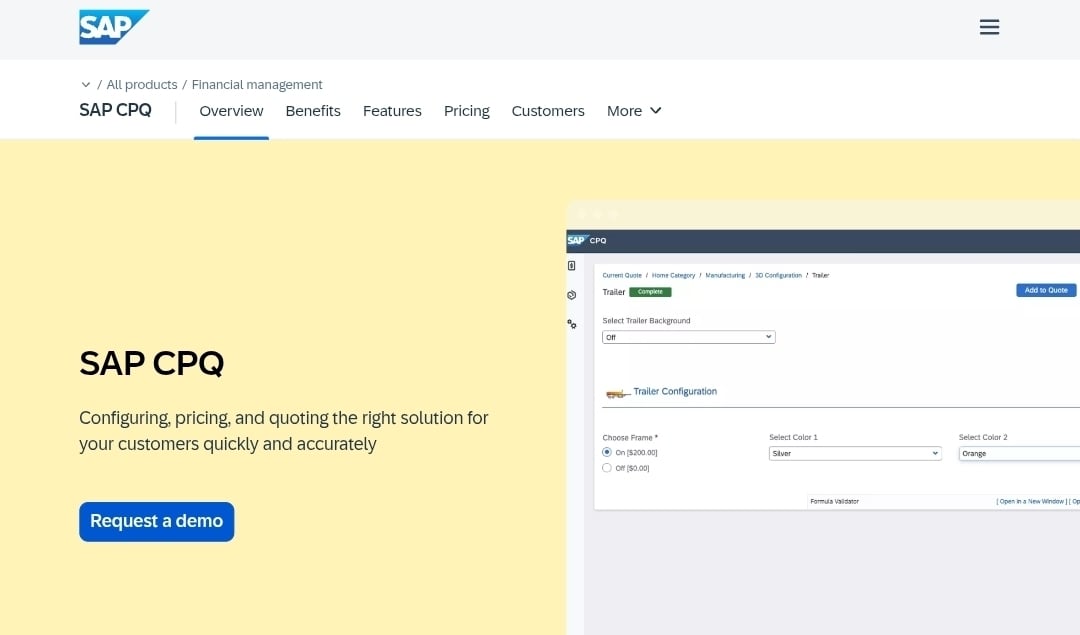
Image via SAP
SAP CPQ is built for large companies that sell complex products.
It works well when you need to create detailed quotes at scale. It uses approved product rules, so every configuration follows the company and pricing guidelines.
Sales teams can create quotes with thousands of line items quickly. It handles products with many variants and complex dependencies without errors.
SAP CPQ also helps increase deal size. When creating quotes, it recommends add-ons, upgrades, or complementary products. These suggestions follow preset rules, which makes upselling and cross-selling easier.
SAP CPQ has built-in pricing control for every deal. It applies the correct pricing based on the sales channel, region, and contract terms. Since it’s cloud-based, teams can access it from anywhere.
Key Features
-
Applies pricing rules based on customer, product, and channel.
-
It sets discount limits and approval rules.
-
Suggests add-ons and upgrades when creating quotes.
-
Automates approvals and exceptions for complex deals.
-
Creates branded quotes and proposals.
-
Connects with SAP Sales Cloud and SAP Commerce Cloud.
Pricing
-
Standard Edition: $98/user/month, with a minimum of 50 users and a 1–5 year contract
-
Add-On for SAP Commerce: $11,518/month
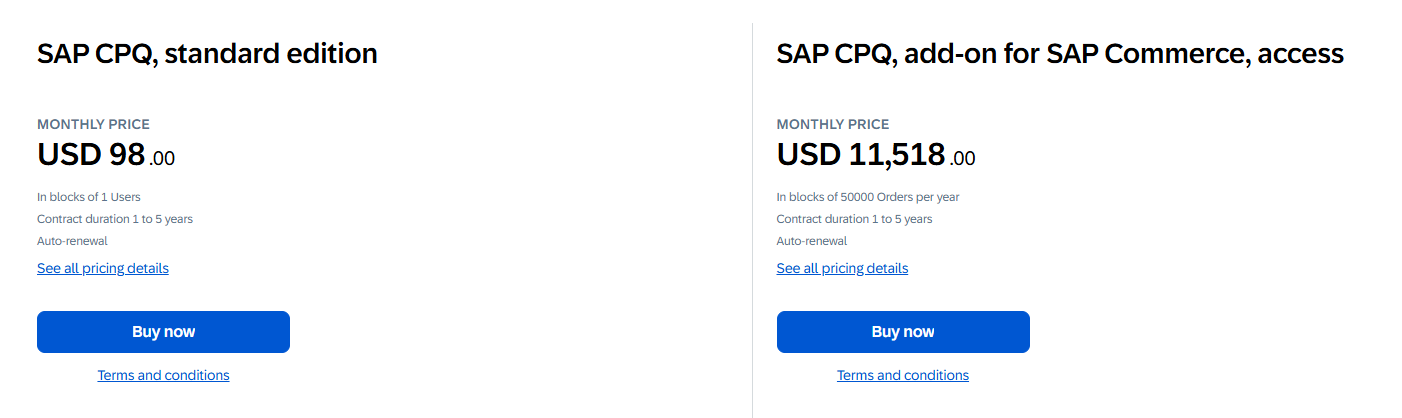
Image via SAP
9. PandaDoc CPQ
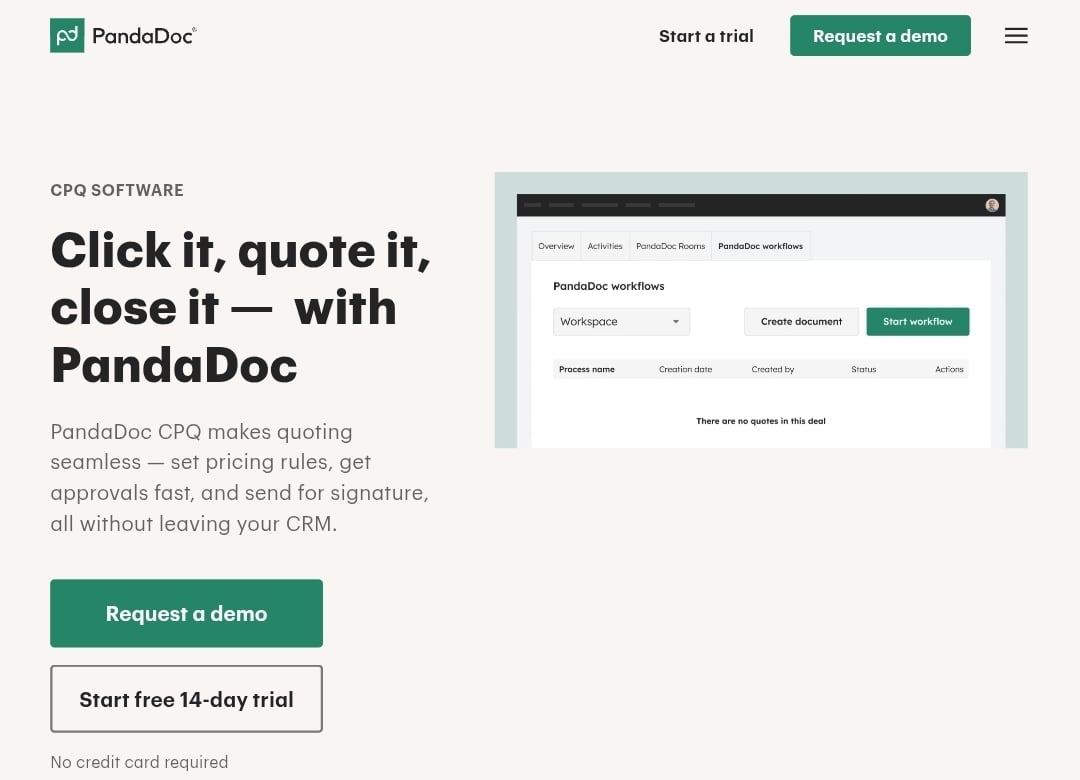
Image via PandaDoc
PandaDoc CPQ helps businesses build custom quotes, letting sales reps assemble bundles and product packages using preset rules.
These rules make sure nothing is left out. They help sales teams send proposals that are complete and correct.
The platform also makes approvals faster. You can set rules so quotes go to finance or managers based on price or deal size. This keeps deals moving and avoids delays. It also creates a record of who approved what, which is great for reporting and maintaining compliance.
Another strong feature is the platform’s two-way CRM sync. Customer data from the CRM pulls into PandaDoc automatically. Once the deal is done, the final quote syncs back to the CRM. This keeps records clean and up to date.
PandaDoc also offers guided selling tools. Preset rules help customers select the right products without making errors. This makes it possible for even less experienced reps to create optimized quotes.
Key features
-
Supports real-time updates of upsells, discounts, and customer-specific pricing.
-
Routes quotes for automated approval based on pricing thresholds and pre-set rules.
-
Allows live editing and design of quotes with tables, multimedia, and terms.
-
Provides two-way CRM synchronization to keep data accurate and current.
-
Automates pricing calculations and applies logic-based rules to prevent errors.
-
Tracks document changes, approvals, and versions for compliance.
Pricing
-
Free
-
Starter: $19/seat/month billed annually, or $35 billed monthly
-
Business: $49/seat/month billed annually, or $65 billed monthly
-
Enterprise: Custom pricing
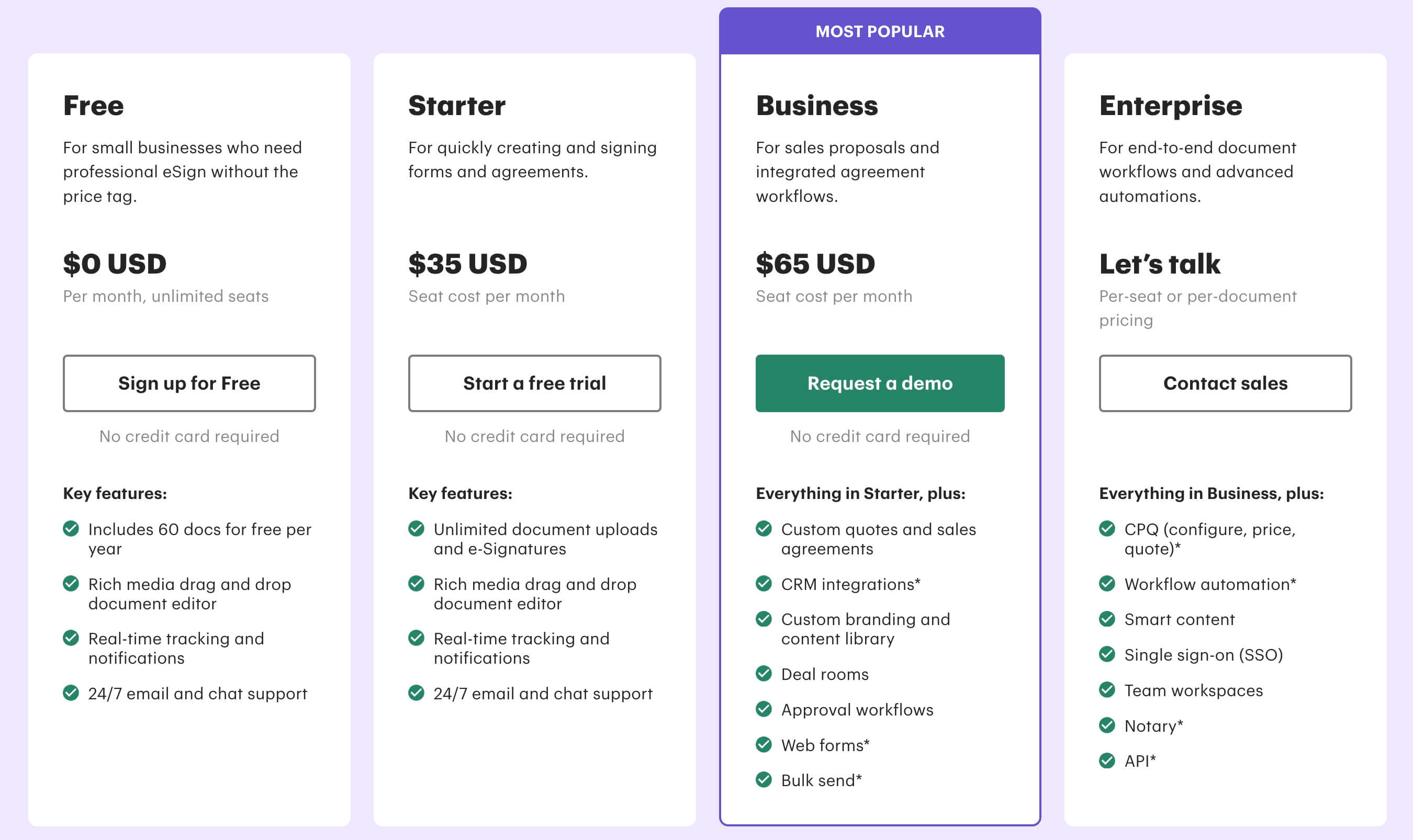
Image via PandaDoc
Turn Every Quote Into Revenue You Can Trust
Choosing the right CPQ solution depends on your current needs and your future growth plans. Some tools are ideal for simple product catalogs and quick quoting, while others handle complex pricing models.
If your business sells configurable products, choose a CPQ system with control and automation. The right system ensures every quote shows approved prices and correct product configurations.
B2B subscription businesses can use Younium CPQ for flexible pricing logic. It provides automated approvals to help teams create accurate quotes and manage subscriptions.
It connects CPQ to SaaS billing, revenue recognition, and contract management systems. This creates a complete quote-to-cash process with clear visibility and full control.
If you’re ready to modernize your quoting and speed up revenue operations, book a demo to try Younium.
FAQ
1. When does a SaaS company need a CPQ solution?
A SaaS company needs a CPQ solution when pricing complexity starts to slow down sales and create risk for finance. This often happens when deals include custom pricing, discounts, or non-standard contract terms. At that point, manual quoting methods no longer scale well.
2. Can CPQ solutions support renewals and upsells?
Yes. The best CPQ solutions, such as Younium, support renewals and upsells for the full customer lifecycle.
In SaaS, revenue growth depends on existing customers. Renewals and expansions introduce changes that are often more complex than new deals. CPQ allows teams to adjust existing contracts instead of rebuilding quotes from scratch.
3. Are CPQ solutions only for large SaaS companies?
CPQ solutions are not limited to large SaaS companies. The real deciding factor is pricing complexity, not company size. Smaller SaaS teams can face the same challenges when deals need customization.
In fact, early-stage companies often rely on informal processes that break as soon as growth accelerates. So, establishing CPQ-driven pricing discipline early pays off, no matter your size.
4. What should finance leaders look for in a CPQ solution?
Finance leaders should focus on how well CPQ supports control without slowing down sales. The right CPQ solution offers:
-
Pricing rule enforcement across all quotes
-
Approval workflows that match financial policies
-
Integration with billing and subscription systems
-
Clear audit trails for contract changes
-
Reporting that supports forecasting and planning
-
Quote structures that map cleanly to revenue recognition schedules under ASC 606 or IFRS 15
5. How does Younium support CPQ-driven SaaS workflows?
Younium supports CPQ workflows by linking pricing and contracts in one system. It also connects subscription revenue to ensure all data stays accurate and aligned. This alignment ensures the quote matches the billed amount for every transaction.
This way, sales and finance teams gain better visibility into recurring revenue and forecasts.