Subscription Management
Learn how B2B SaaS teams use technology in finance, the pitfalls of traditional financial processes, and how modern technology can help.

Jump to read
What is the Use of Technology in Finance?
What are the Key Challenges of Traditional SaaS Finance Processes?
What are the Benefits of Using Technology in Finance?
What are the Applications of Technology in Finance for B2B SaaS?
FAQ
Wrapping Up
Using technology in finance helps B2B SaaS companies handle billing, reporting, revenue recognition, and collections with less manual work. It gives finance teams better control, fewer errors, and a clearer view of cash flow as the business grows.
For SaaS companies, this matters a lot. Recurring billing, contract changes, and usage-based pricing can make finance work messy fast. Spreadsheets can only take you so far. Once the business scales, teams need tools that can keep up.
In this post, we will examine the key challenges of traditional finance processes and the main benefits of using technology in finance. You’ll also learn the ways in which SaaS teams use technology in finance.
So, let’s get right to it.
|
TL;DR Using technology in finance helps SaaS companies reduce manual work. You can use tools to automate billing, reporting, compliance, and payment tracking.
So, use technology in finance to save time, reduce costs, and improve productivity. |
What is the Use of Technology in Finance?
Using technology in finance helps SaaS and fintech companies do finance work faster. Teams can automate billing, invoices, payment tracking, and revenue reports.
This matters even more for subscription businesses. Recurring payments and pricing changes can become hard to manage with manual processes alone. Technology in finance helps teams stay in control as operations grow.
It also helps teams save time and avoid common billing errors. The result is a faster and more reliable finance process.
Overall, using technology in finance is crucial for smooth daily operations. It’s no longer an option to rely on manual work.
Also Read:
What are the Key Challenges of Traditional SaaS Finance Processes?
Traditional SaaS finance processes often rely on spreadsheets, manual checks, and disconnected tools. That makes billing slower, revenue tracking harder, and reporting less reliable. As a SaaS business grows, these gaps create more errors, more rework, and less visibility for the finance team.
This is where using technology in finance helps. It gives finance teams better systems for billing, reporting, and revenue management.
Manual Billing and Invoicing Create Delays
Many finance teams still create invoices by hand. Some also track billing in spreadsheets. That takes time and creates extra work.
Things get even harder when customers change plans or pricing. One small mistake can lead to payment delays or billing issues.
Using technology in finance helps automate billing work. Subscription management tools like Younium can send invoices, manage recurring billing, and automate payment reminders.
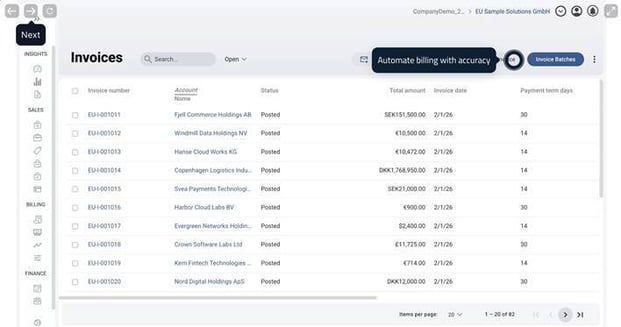
Image via Younium
This helps teams save time and reduce errors.
Revenue Recognition Becomes Hard To Manage
SaaS revenue is rarely simple. Customers upgrade plans, pause subscriptions, or change contracts during the billing cycle. Tracking those changes manually can get messy fast.
By using technology in finance, you can have accurate revenue recognition and fewer billing errors.
Younium, for example, supports accurate revenue recognition for SaaS businesses
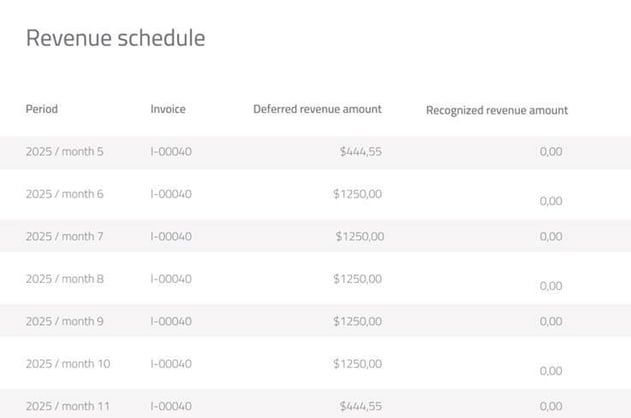
Image via Younium
It helps teams stay aligned with ASC 606 and IFRS 15. That means finance teams can spend less time fixing records and more time trusting the numbers.
Cash Flow Visibility Is Too Limited
In traditional SaaS finance processes, reports often arrive too late or require extensive manual updates. That makes it harder to spot overdue payments, failed collections, or revenue gaps before they become a problem.
Using technology in finance helps bring billing, collections, and reporting into a single workflow. With Younium, finance teams can track recurring revenue more clearly. That makes planning easier and gives the team a much better handle on cash flow.
Disconnected Systems Slow Down The Team
Using technology in finance becomes even more useful when teams are stuck moving data between different systems.
In many traditional SaaS setups, billing, CRM, accounting, and reporting do not sync well. That leads to duplicate work, missing records, and different teams looking at different numbers.
Using the right technology in finance solves this by connecting the stack. Modern tools like Younium integrate with other systems, so financial data stays in one place. That helps reduce manual entry, keeps records cleaner, and gives teams a more reliable source of truth.
Compliance and Audit Work is Complex
As SaaS companies grow, compliance gets harder to manage. Finance teams must keep up with tax rules, invoicing rules, and revenue standards. Manual work increases the risk of mistakes.
By using technology in finance, you can reduce that risk by adding more control to the process.
Younium, for example, supports compliance through features like PEPPOL e-invoicing and TaxJar integration for sales tax. It also helps teams with accurate revenue recognition. This makes audits and reporting much easier to manage.
Pricing Changes Add Complexity
Most SaaS companies change their pricing over time or offer multiple pricing models. They may offer usage-based billing, custom contracts, or new subscription plans. Manual finance processes often struggle to keep up.
Using technology in finance helps teams handle those changes without hassle.
Younium is built for subscription data, billing schedules, and usage-based pricing. So, finance teams can manage more complex models with less effort. That makes scaling feel a lot less chaotic.
|
How Using Technology in Finance Solves Common Challenges
|
Also Read:
What are the Benefits of Using Technology in Finance?
Using technology in finance can help you save time and money and improve productivity. Using the right tools keeps your data safe and helps you stay compliant.
Let’s briefly discuss some important benefits of using technology in finance.
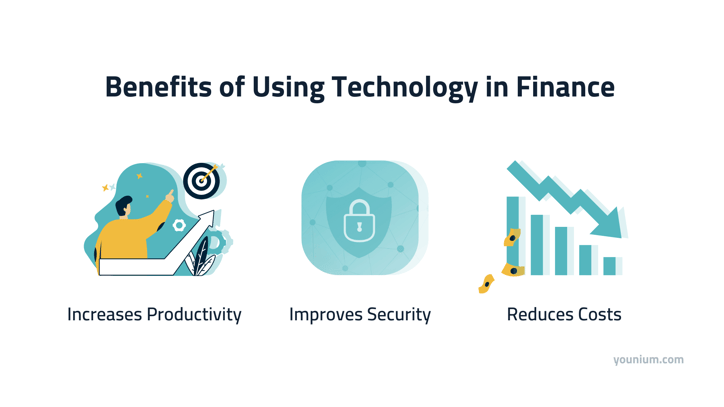
Increases Productivity
Implementing technology in finance can play a huge role in increasing your team’s productivity.
Here’s how using technology in finance can boost productivity.
-
Revenue Recognition: One of the most challenging aspects of running a B2B SaaS company is keeping up with revenue recognition standards. Most B2B SaaS companies provide services based on unique subscription models, which often make it difficult to streamline revenue recognition. However, subscription billing software solutions like Younium automate revenue recognition and ensure your company complies with ASC 606 and IFRS 15 regulations.
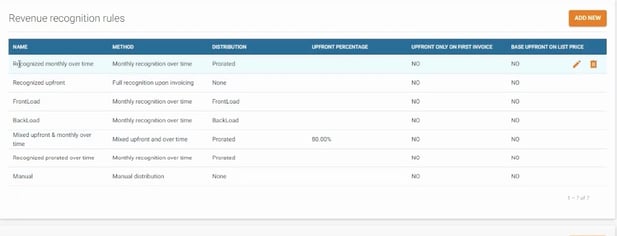
- Subscription Billing Management: Different customers may have different billing cycles and contract terms. Managing things manually takes time and increases the chance of errors. Tools like Younium help automate billing schedules and reduce errors.
- Cash Flow Reporting: Manual cash flow reports take time to build and update. Finance tools give teams faster access to payment and revenue data.
- Collection workflows: Manual collections often slow down cash flow. Automated workflows help teams follow up on overdue invoices faster.
- Invoicing: Using technology in finance makes the cash collection process a walk in the park by automating the entire process. With B2B e-invoicing tools, your accounts receivable team can easily automate invoice creation and sending to reduce processing time.
Improves Security
Finance teams in B2B SaaS companies deal with confidential customer data, which needs to be completely secure. Using technology in finance can help with that.
Here are some of the solutions that help keep your financial data secure.
- Encryption: Encryption prevents potential hackers from accessing or manipulating your customers’ data. This means that any sensitive information you have stored in your systems will remain unreadable without authorized access.
- Multi-Factor Authentication: This feature requires more than one piece of information to verify who is trying to access sensitive information. In finance teams, it can be used as an extra layer of security that prevents unauthorized access to your customers’ financial data.
- Audit Trail: Spreadsheets are hard to track and easy to lose. Technology in finance keeps billing and payment records in one place.
- Customer Data Protection: Not everyone should see sensitive finance data. Finance systems help companies control who can access billing and payment records.
- Safer Invoice Handling: Manual invoicing can increase security risks. Tools like Younium help teams send invoices through secure workflows.
Ensures Compliance
As a SaaS company, you must comply with regulations within your industry. This includes financial compliance, security compliance, and data security compliance.
Implementing technology in finance makes it easier for you to ensure regulatory compliance.
For example, as your company grows, you may require more extensive third-party integrations or a change in pricing models to accommodate different invoicing requirements.
This can make it more difficult to keep track of revenue. It may also expose you to multiple breach points. As such, you must remain compliant to keep your data safe and avoid paying fines or facing penalties.
While it can be difficult for your finance teams to maintain compliance, technological advancements are here to help. Using advanced tools like Younium makes it easy to remain compliant and safe in the following ways:
-
Younium integrates with other billing gateways and allows you to exchange e-invoices under PEPPOL compliance regulations, keeping you and your customers’ data safe.
-
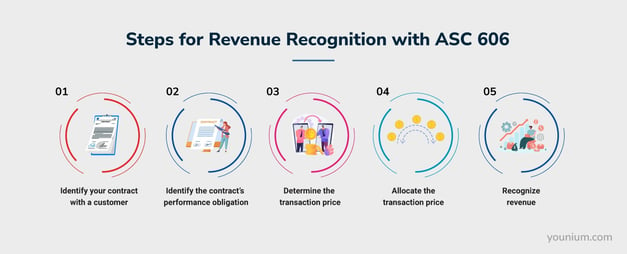
Younium helps businesses track their monthly recurring revenue (MRR) and enable accurate revenue recognition according to ASC 606 compliance regulations.
-
It helps you remain financially compliant with taxes by integrating with TaxJar and automating the addition of sales taxes to invoices.
Reduces Costs
Using technology in finance helps you maximize your company's resources using AI and automation to expedite financial workflows. It:
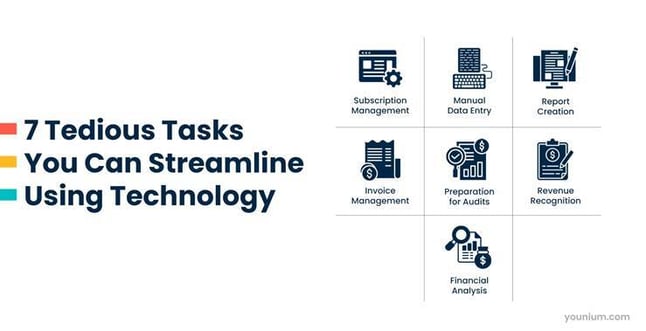
- Reduces Operational Expenses: By using technology in finance, you can automate tedious tasks. So, you’ll need fewer people and still get better results. Here are some common processes you can automate using technology in finance.
- Improves Resource allocation: Finance tools help companies review costs and spot areas where they can spend less. This helps teams use company resources in a smarter way.
- Saves Time: Automation also speeds up processes. You can get more done in less time. This, of course, saves both money and time.
|
Key Benefits of Using Technology in Finance
|
Also Read:
What are the Applications of Technology in Finance for B2B SaaS?
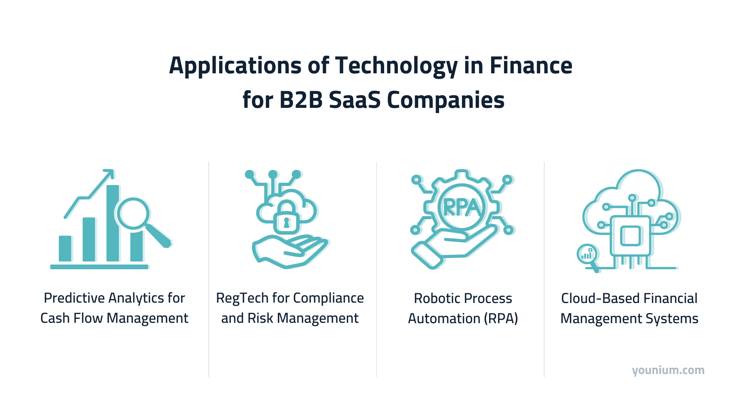
Predictive analytics, RegTech, RPA, and cloud-based financial management are some key technologies in finance. They improve forecasting, compliance, and other financial processes.
Let’s see how B2B SaaS teams use technology in finance to improve processes.
Predictive Analytics for Cash Flow Management
One of the most important tools B2B SaaS companies often use to stay on top of their finance game is predictive analytics. It’s one of the most common use cases of technology in finance.
It uses data to identify trends and correlations in financial trends. This information is then used to determine the likelihood of future outcomes in whatever context the data is taken from.
It provides in-depth insights into your company’s cash flow trends and identifies potential loopholes. Based on the results of this analysis, you can make informed decisions to better manage your company’s finances.
Here are some examples of how predictive analytics enhances B2B SaaS business operations.
- Revenue and Cash Flow forecasting: Using predictive analytics, you can generate accurate cash flow forecasts. You can then use the information to optimize your financial planning processes, anticipate potential liquidity challenges, and take proactive measures to curb financial losses.
- Customer Churn: Predictive analytics tools can be used to analyze customer payment patterns and trends and predict customer churn. Customer churn analysis helps you identify at-risk customers and take measures to reduce churn.
- Fraud Prevention: B2B SaaS companies often handle large transaction volumes, putting them at risk of fraud and cybercrime. Predictive analytics models use cognitive computing and machine learning to analyze data patterns and detect real-time spam or anomalies. They check customers’ transactions and ensure they always remain compliant with anti-money laundering regulations.
RegTech for Compliance and Risk Management
Finance teams at B2B SaaS companies often handle large transaction volumes. They must also comply with specific regulatory requirements.
These compliance regulations are put in place to protect customers' data and curb financial crimes. However, it can be overwhelming to keep up with as the number and complexity of financial transactions increase.
Some of the major challenges CFOs of B2B SaaS face in achieving compliance include:
- Keeping up with the constantly evolving compliance requirements according to ASC 606 and IFRS 15 regulations
- Maintaining compliance as the company grows
- Keeping up with tax requirements
To help with this, a form of technology in finance called Regulatory Technology (RegTech) enables finance professionals to automate compliance processes.
The technology is being widely adopted by businesses of all types worldwide. The global market size was 24.34 billion in 2025 and is expected to reach $112.10 billion by 2033.
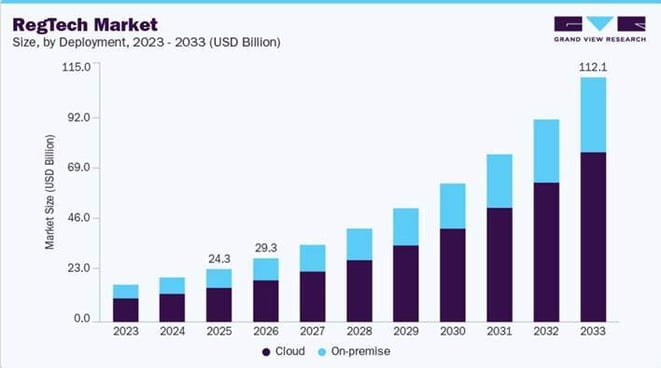
Image via Grand View Research
Here are some ways in which RegTech helps B2B SaaS companies remain compliant with regulations.
- Automatic Compliance: SaaS accounting software solutions like Younium only process data according to GDPR requirements to keep your customers’ data safe from unauthorized access.
- Tax Compliance: Rather than struggling with tax calculations, you can use software solutions like Younium to automate tax calculations. Such tools also help ensure tax compliance according to the state or region in which your company operates.
- Risk Assessment: RegTech platforms use machine learning, automation, and data analytics to monitor and streamline regulatory compliance. They use risk assessment tools to help B2B companies identify and manage the risks associated with their customers' data.
Robotic Process Automation (RPA)
RPA helps finance teams in B2B SaaS businesses through automatic invoice processing. It is one of the repetitive tasks in the financial departments of B2B SaaS companies. It can also be time-consuming and overwhelming.
With tools like Younium, invoicing can be automated and streamlined. It uses advanced systems to automate invoice reminders, invoicing, and billing.
This significantly reduces the time and resources required for manual data entry and allows finance teams to focus on more strategic tasks, enhancing overall productivity.
Take a look at Younium’s simple dashboard for creating and managing invoices.
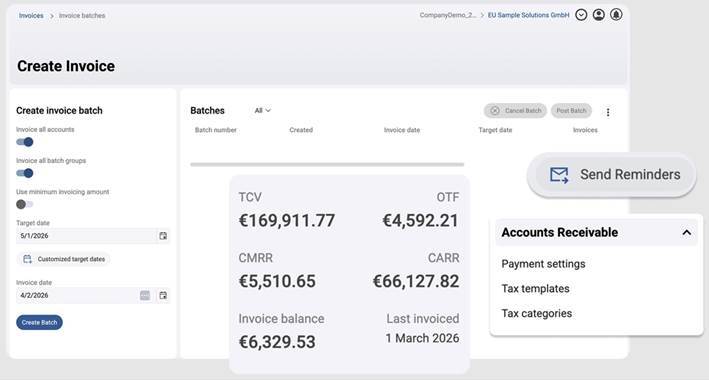
Image via Younium
Cloud-Based Financial Management Systems
Cloud-based financial management systems centralize financial data, making it accessible anywhere. Cloud-based systems enhance flexibility, allowing finance professionals to enjoy seamless collaboration.
A good example of cloud-based financial management software that streamlines finance operations in B2B SaaS companies is Younium.
It streamlines subscription management, billing, invoices, and other features that elevate customers’ payment experience. Here are some of the unique features it offers:
- Automates the billing cycle, including automatic invoices, dunning, and payment collection.
- Eliminates the need for bulky spreadsheets and tools and manages advanced subscription data on an easily accessible database.
- Streamlines accounts receivable (AR) processes by creating billing schedules according to specific dates and times. This way, billing reminders for usage-based billing are sent out faster, and cash flow is managed better.
- Automatically calculates and validates your customers’ usage for more accurate billing.
|
Quick Summary: Applications of Technology in Finance
|
Also Read:
FAQ
1. How is technology being used in finance?
Technology is being used to simplify several aspects of finance in the following ways:
- Business Process Automation: Business process automation eliminates manual invoicing, data entry, and other redundant tasks.
- Cloud-based systems: These help with collaboration, scalability, and flexibility across finance teams.
- Cybersecurity: Technology in finance can be used to facilitate faster and more secure online payments while protecting your customers' data.
- Data analysis: You can employ advanced data analytics tools to monitor the profitability of your business and make data-driven decisions.
- Regulatory technology (RegTech): RegTech helps finance professionals ensure that financial transactions are done in compliance with regulations.
2. What is the future of technology in finance?
With each day that passes, it becomes increasingly clear that technology in finance is here to stay as it offers an endless list of benefits for the future.
The future of technology in finance holds exciting possibilities, driven by continuous advancements in digital innovation. Some technologies and solutions to watch out for include:
- Blockchain and decentralized finance
- Subscription management solutions
- Artificial intelligence and machine learning
- Quantum computing
- Digital identity solutions
- Enhanced cybersecurity measures
- RPA expansion
- Augmented reality and virtual reality applications
- Regulatory tech (RegTech) advancements
- Cybersecurity
3. What does financial technology mean?
Also known as Fintech, financial technology refers to the use of technology to enhance or automate the financial aspect of a company’s business operations. Its aim is to optimize financial processes and lead to more secure data management.
4. What role does subscription management play in finance technology?
Subscription management solutions are critical in finance technology as they streamline billing, invoicing, and revenue recognition processes. By automating these functions, they reduce manual errors and save time, allowing finance teams to focus on strategic tasks. These solutions also provide comprehensive analytics and reporting, helping businesses make data-driven decisions and maintain compliance with financial regulations.
5. Where does Younium fit in the tech stack?
As a subscription management solution designed for B2B SaaS companies, Younium is positioned as a central component of the finance tech stack. It connects seamlessly with other systems, including CRMs, ERPs, and payment gateways, creating a unified platform. This integration capability makes Younium a core hub for managing subscriptions, delivering a single source of truth, and offering valuable insights through advanced analytics. In Ben Murray's 2023 and 2024 annual reports on SaaS tech stacks, Younium is highlighted as a key player in revenue recognition, BI/analytics, and invoicing software.
6. How does Younium handle revenue recognition and compliance?
Younium simplifies revenue recognition with its built-in capabilities aligned with critical accounting principles and standards, including the revenue recognition principle, ASC 606 revenue recognition, IFRS, and more. It offers automated processes tailored to B2B SaaS needs, ensuring effortless compliance and precise revenue allocation. Younium provides a fully integrated revenue recognition solution built directly into the platform, without the complexity of external add-ons.
Wrapping Up
Technology is pivotal in transforming traditional financial practices, offering solutions that cater specifically to the unique needs of B2B SaaS operations.
While technology in finance may be here to stay, it cannot completely eliminate the need for finance professionals like you. As such, it is best to embrace it and leverage it to keep your business running like a well-oiled engine.
Looking for an all-in-one subscription management software to streamline finance and other aspects of your SaaS business? Try Younium.
|
Key Takeaways
|