See how to improve subscription renewal rates: what a good renewal rate looks like, why customers leave, and the proven strategies that fix it.
.png)
Jump to Read:
What Is a Subscription Renewal Rate?
How to Calculate Subscription Renewal Rates
What Is a Good Subscription Renewal Rate?
Why Do B2B SaaS Customers Fail to Renew?
How to Improve Subscription Renewal Rates: 10 Proven Strategies
FAQ
Wrapping Up
|
Quick Summary
|
To improve subscription renewal rates, treat renewal as something built over the entire customer relationship, rather than as a single date. Detect churn risk early and start renewal discussions about 90 days before the renewal date. You also need to prove value throughout the contract period and reduce billing friction.
The stakes rise as your company scales, and maintaining high subscription renewal rates drives growth. The stakes climb as your company scales. High Alpha's 2025 SaaS Benchmarks Report, a survey of more than 800 SaaS companies, provides the evidence. Firms above $50 million in annual recurring revenue (ARR) generate roughly 60% of new ARR from existing customers.
We wrote this guide for the CFOs and finance leaders at the B2B SaaS companies Younium serves every day. You will find current subscription renewal rate benchmarks, calculations, and 10 proven strategies to improve renewal performance.
What Is a Subscription Renewal Rate?
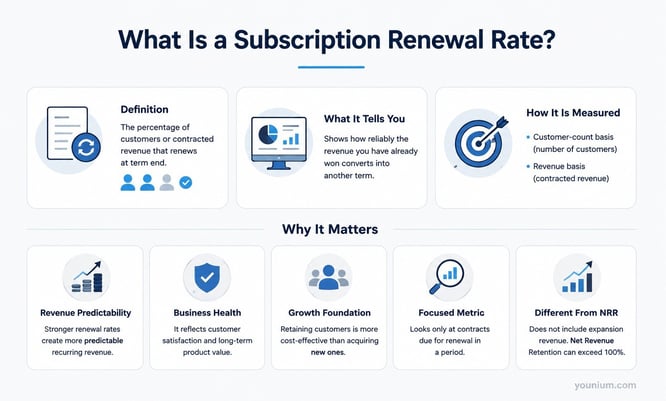
A subscription renewal rate is the percentage of customers or contracted revenue that renews when a contract ends. It shows how reliably existing customers continue into another contract term. You can measure a SaaS renewal rate on a customer-count basis or a revenue basis.
This metric is an important part of subscription management for B2B SaaS companies. It’s not the same as churn rate, which measures customer or revenue losses across your entire customer base.
Subscription renewal rates look only at the contracts due during a period. Net revenue retention is different because it includes expansion revenue, so it can exceed 100%.
Why Renewal Rate Matters for Your Subscription Business
Renewals protect the ARR (annual recurring revenue) that supports future growth. They also separate fast-growing companies from the rest, because expansion revenue depends on subscription renewals.
Reliable subscription renewal rates also make revenue forecasts more accurate. When renewals are predictable, leadership teams can trust their forecasts. Subscription renewal rates are also one of the first metrics investors review during due diligence.
|
What Is a Subscription Renewal Rate? Subscription renewal rates show the percentage of contracts that renew when they come up for renewal. It can be measured using either the number of customers or the amount of contracted revenue renewed. Finance teams use it to understand how well existing revenue is being retained over time. |
Also Read:
How to Calculate Subscription Renewal Rates
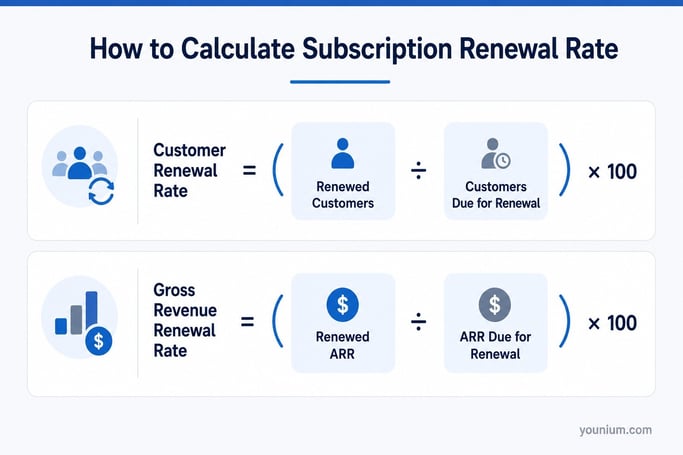
You can calculate the subscription renewal rate by dividing completed renewals by the contracts due, then multiplying by 100. Only contracts that are up for renewal in the period should be included.
|
Customer Renewal Rate = (Customers Who Renewed ÷ Customers Due for Renewal) × 100 |
If 90 of 100 customers due in a quarter are renewed, your customer renewal rate is 90%.
|
Gross Revenue Renewal Rate = (Renewed ARR ÷ ARR Due for Renewal) × 100 |
If contracts worth $2 million were due and $1.84 million renewed, your gross revenue renewal rate is 92%.
|
Why Should You Track Both Customer and Revenue Renewal Rates? The two subscription renewal rate metrics provide different insights. Customer renewal rate gives equal weight to every account, while gross revenue renewal rate gives more weight to larger contracts. A healthy customer renewal rate can hide the loss of a large account, so track both alongside your recurring revenue metrics. |
What Is a Good Subscription Renewal Rate?
A good subscription renewal rate for private B2B SaaS is roughly 91% of contracted revenue, with top performers renewing 100%. The median is based on SaaS Capital's 2026 survey of 1,000+ private B2B SaaS companies.
On a customer-count basis, High Alpha's 2025 report puts the norm at retaining 9 of 10 customers.
The average SaaS renewal rate depends on contract size, segment, and the basis you use to measure. The table below gives the current medians and top-performer marks for each segment:
|
Segment/Basis |
Median |
Top Performers |
Source |
|---|---|---|---|
|
Private B2B SaaS, $3M–$20M ARR (bootstrapped) |
NRR 103% · GRR 91% |
NRR 117.9% · GRR 100% (90th percentile) |
SaaS Capital 2026 survey |
|
Private B2B SaaS, $25k–$50k ACV |
NRR 102% |
NRR 111% (top quartile) |
|
|
Private SaaS, overall survey group |
GDR (Gross Dollar Retention) 91%, NDR ~101% |
GDR 95%, NDR (Net Dollar Retention) 109% (top quartile) |
|
|
Customer retention, all ARR bands |
≈9 of 10 customers kept |
— |
High Alpha 2025 |
|
Scaled enterprise software |
NDR ~110-120% |
— |
|
|
All SaaS company sizes, incl. self-serve (~2,700 companies) |
NRR 82% |
NRR 97% (upper quartile) |
Read each subscription renewal rate benchmark against your own segment. ChartMogul's 82% median covers companies of all sizes, including self-serve products billed monthly.
Two trends are important for 2026 planning. According to the KeyBanc/Sapphire 16th survey (2025), gross retention is moving towards 90% after falling to 86% in 2023. The survey also expects ARR growth to rise from 15% to 20%, the first increase in three years.
Gross revenue retention doesn’t include expansion revenue, while net revenue retention does. Understanding MRR and CMRR helps you keep those metrics separate.
As a public yardstick, Snowflake reported 126% net revenue retention for the quarter ended 30 April 2026.
|
What Is a Good Subscription Renewal Rate? Most private SaaS companies retain about 91% of their revenue and 90% of their customers. The best performers renew almost all revenue and generate additional growth from existing customers. |
Also Read:
- What Is a Good Churn Rate for SaaS Companies? Benchmarks
- What Is SaaS Analytics and Which Metrics Should You Track?
Why Do B2B SaaS Customers Fail to Renew?
B2B SaaS customers usually fail to renew contracts for preventable commercial reasons rather than sudden surprises. Across the B2B SaaS teams we work with, renewals that slip are typically lost months before the date.
Budget pressure is often at the center of the problem, as per Churnkey's State of Retention 2025 report. Budget limitations were the leading cause of voluntary churn, at 33%.
Here are the main reasons we see subscription renewal rates drop:
- Unrealized Value: The customer never tied your product to a financial outcome they can defend.
- Champion Change: Your internal sponsor moves on, and nobody resells the value to their successor.
- Budget Scrutiny: Renewal costs come under review, but the value is hard to justify.
- Low Product Usage: Unused seats and modules make the renewal look like a waste.
- Surprise Uplifts: Prices rise without adequate notice or explanation.
- Invoicing Friction: Errors in quoting, invoicing, or co-terming can slow down approvals.
- Ownership Gaps: If no one is assigned to handle the renewal, the notice deadline gets missed.
Every cause maps to a strategy below. Fixing these issues early is the best way to boost your subscription renewal rates and stop churn before it happens.
|
Why Do Customers Fail to Renew Their Subscriptions?
Most non-renewals trace back to unproven value, sponsor change, or budget pressure. Budget topped the list of causes of voluntary churn at 33% in 2025. Each cause is visible early if you watch for it. |
Also Read:
- Churn Analysis: Definition, Ways to Do it, & How to Monitor it
- What Is Revenue Leakage (Plus How to Identify and Prevent It)
How to Improve Subscription Renewal Rates: 10 Proven Strategies
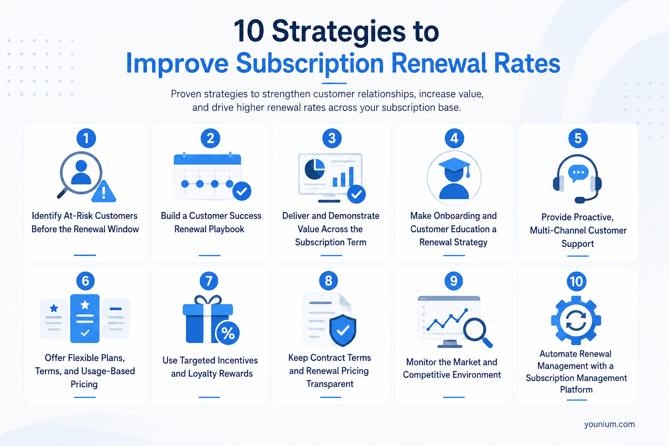
To increase your subscription renewal rate, treat it as a continuous process rather than an isolated event. We’ve got 10 proven best practices that also work as retention strategies. That’s because a renewal is retention made contractual.
1. Identify At-Risk Customers Before the Renewal Window
Identify customers that could be at risk early on. Run quick satisfaction surveys after onboarding or support tickets. Pair that feedback with engagement data from your customer success platform.
Track these three metrics:
- How often they use your service
- How often they log in
- How they feel during support chats
Payment behavior should also be considered. Slow invoice approvals, downgrade requests, and declining seat counts often reduce subscription renewal rates over time.
After receiving customer feedback, close the loop. Act on insights, fix recurring issues, and update users on what changed.
You need the right team structure to handle these indicators. The 2025 ChurnZero Customer Revenue Leadership Study found that companies with dedicated CSM, support, and enablement teams consistently hit higher net revenue retention.
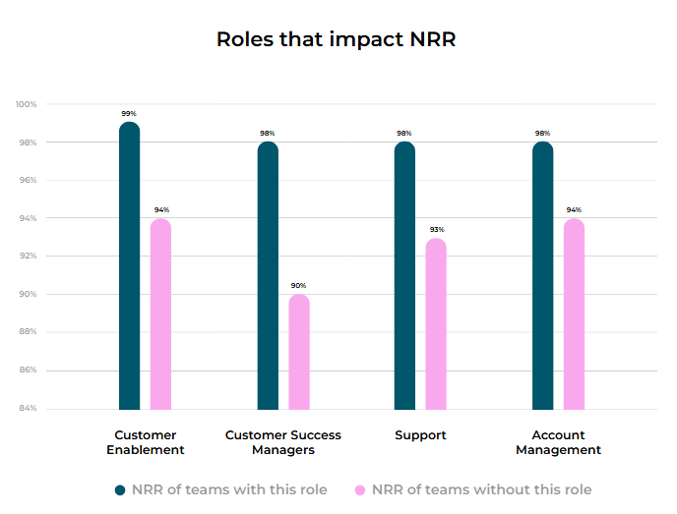
Image via ChurnZero
Also Read:
2. Build a Customer Success Renewal Playbook
A customer success renewal playbook turns renewals into a predictable, structured process. It scripts who does what, and when, for every expiring contract.
A solid customer success renewal process runs on a timeline like this:
- T-120: Customer success reviews account health and flags risks.
- T-90: The renewal conversation opens with a personalized value recap.
- T-60: Finance issues the renewal quote, and any price increase is explained in writing.
- T-30: Billing confirms terms, co-terming, and invoice details.
- T+30: The team logs the outcome and the reasons behind it.
Starting early matches how your customers actually buy. Budget cycles, procurement reviews, and legal checks all take time. If you rush a renewal, you invite last-minute objections and risk losing the account.
Personalize every reminder with the customer's name, usage history, and realized benefits. This renewal reminder example from Grammarly shows how you can increase subscription renewal rates by reminding users of the value you provide:
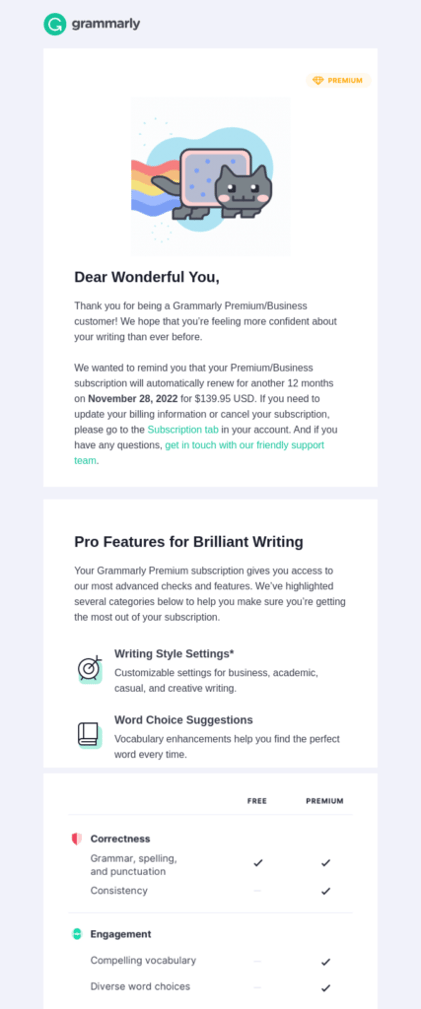
Image via Moosend
3. Deliver and Demonstrate Value Across the Subscription Term
Customers renew what they can justify. To increase subscription renewal rates, prove your value long before you ask for a signature.
This approach also helps you earn expansion. Per SaaS Capital's 2025 retention benchmarks, companies with at least 110% net revenue retention outgrew the 24% survey median. Revenue growth follows the accounts that can see their own return.
Run quarterly value reviews with every major account. Pair usage data with outcomes that a finance leader recognizes:
- Hours saved
- Errors removed
- Revenue reported faster
Here’s a sample QBR scorecard for SaaS businesses, featuring a so-what and what-next framework:
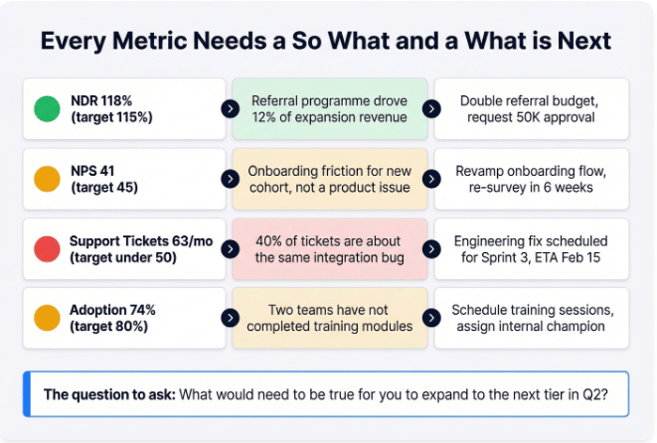
Image via Prospeo
Tie each roadmap update to a problem that the account actually has. Share feature updates and practical tips that keep your product visible and useful. Users will notice if they only hear from you at renewal time, and this negatively impacts subscription renewal rates.
The teams we work with build the renewal deck across the whole year. By the time the renewal lands, the business case is already written and agreed.
Also Read:
- Revenue Growth Management: What It Is and Why It's Important
- Essential Subscription Revenue Recognition Strategies
4. Make Onboarding and Customer Education a Renewal Strategy
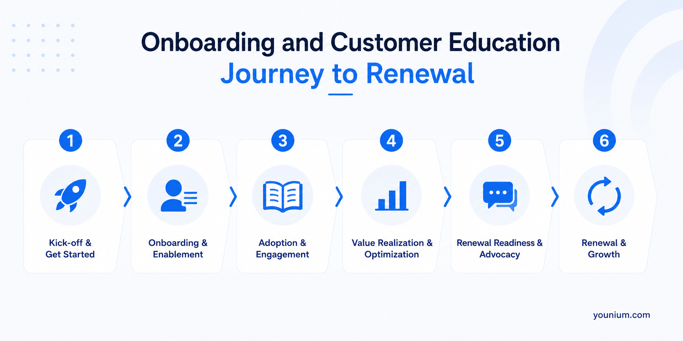
The first 90 days are crucial for your subscription renewal rates. If customers don’t learn to use your software early on, it becomes shelfware. Nobody pays to renew a tool they don't use.
Data from Userpilot's 2025 SaaS Product Metrics report puts the average onboarding checklist completion rate at just 19.2%. That’s product engagement data, not revenue data, but the renewal lesson stands.
To fix onboarding, use these steps:
- Set up role-based onboarding, short tutorials, and a resource library they can actually use.
- Walk new teams through the workflows they need to hit their goals.
- Skip the generic feature tour.
- Live walkthroughs and webinars help late adopters catch up.
- Give every account a named onboarding owner and a first-90-day plan.
- Review completion at the first value check-in, not at the renewal.
Customer retention is profitable only if the cost of keeping them stays within budget. This way, you can protect your margins while improving your subscription renewal rates.
5. Provide Proactive, Multi-Channel Customer Support
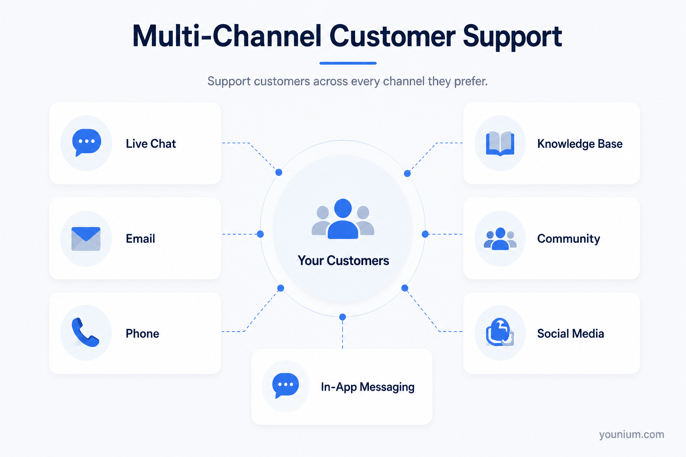
Supported customers stay. That’s why you have to make it easy and quick for them to reach out when they need help. One way to do this is to provide multi-channel support.
Improve customer support and increase subscription renewal rates using these steps:
- Offer live chat, email, and phone so customers can reach out however they want.
- Train your support team on product knowledge so they can resolve issues in one touch where possible. Speed matters, but a correct answer that sticks matters more.
- Go beyond reactive tickets. Reach out when usage drops or an integration breaks before the customer raises it.
- Pair excellent support with self-service guides and a searchable knowledge base for common questions.
Get senior staff involved early if an account looks at-risk. Setting up your rules ahead of time helps protect your subscription renewal rates, as everyone knows the red flags to watch for, who steps in, and how to fix the issue.
Also Read:
- What Is Subscription Billing? A Guide for SaaS Businesses
- 11 Accounts Receivable Best Practices to Improve Cash Flow
6. Offer Flexible Plans, Terms, and Usage-Based Pricing
Flexible pricing is more than just a sales tool; it also helps increase subscription renewal rates. Rigid plans force customers to churn the moment their budgets or needs shift. Give accounts a path to scale down rather than walk away.
For example, a cloud storage SaaS business might offer flexible monthly pricing based on used storage:
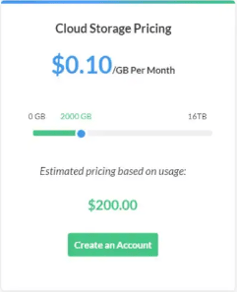
Image via Maxio
Here’s how you can make pricing more flexible to improve subscription renewal rates:
- Offer tiered plans across monthly, quarterly, and annual terms so customers can match spend to need.
- Let users pause and resume their accounts, and offer easy downgrade options to keep them.
- If their usage fluctuates, introduce usage-based pricing so their bill directly matches the value delivered.
- Document your downgrade process as clearly as your upgrade path. Customers trust a pricing model that they can move in either direction.
Billing terms drive renewals as well. Per ChartMogul's 2025 retention report, annual plans carry a median NRR 10 to 20 percentage points higher than monthly plans. Review plan fit before each renewal as part of your subscription pricing strategies.
7. Use Targeted Incentives and Loyalty Rewards
Renewal incentives work when they protect the margin instead of buying it back. Reward commitment, not hesitation, to keep your subscription renewal rates high.
These steps help you structure rewards that drive subscription renewals:
- Offer early-renewal credits, multi-year price locks, and customer loyalty perks. A simple loyalty program shows long-term customers that their value grows over time.
- Structure the tiers around tenure and commitment. For example, year-one terms receive priority support, and multi-year terms can enjoy locked pricing and roadmap input.
- Publish your loyalty tiers clearly. When customers understand the value they’ll get, they’re more likely to stay.
- Only offer discounts when a customer genuinely doesn’t have the budget. Keep these discounts temporary and make sure they require management approval. Every price cut reduces your revenue, so each one should give a commitment in return.
- Stop giving automatic discounts to everyone. If you have to lower your price to close every renewal, it means you’re not showing enough value.
By formalizing clear loyalty tiers, locking pricing for multi-year terms, and gating exceptions, you turn rewards into a tool that drives up your subscription renewal rates.
Also Read:
- Forecasting Subscription Revenue: How to Do It Right
- How to Ace Subscription Management and Revenue Forecasting
8. Keep Contract Terms and Renewal Pricing Transparent
Transparent terms remove the surprises that hurt your subscription renewal rates. Proper SaaS contract renewal management requires transparency.
Your renewal process must involve the following core actions:
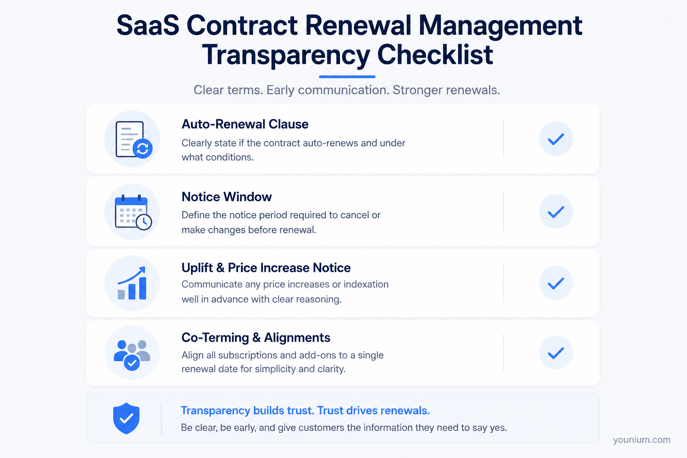
- Put auto-renewal clauses and notice windows in plain language, and remind customers before the window closes.
- Communicate price increases and indexation months ahead. State the reasons and the added value in writing.
- Co-term mid-cycle additions so the renewal arrives as one clean decision.
- Apply the same rigor to renewal quotes as to new business.
To minimize friction, ensure that line items are accurate, approval routes are clear, and there are no surprise fees.
The term length itself moves the number. The KeyBanc/Sapphire 15th survey noted earlier found an annual churn rate of 14% for monthly contracts. That falls to 3% on terms of three years or more. Multi-year deals are already mainstream, at roughly half of the surveyed contract mix.
9. Monitor the Market and Competitive Environment
Knowing your competitors protects your subscription renewal rates. Even if your product doesn't change, your customers' needs do, and that shifts how they value your software.
Here are some ways to monitor your competitors:
- Review competitor pricing models and packaging each quarter, and track the trends reshaping buyer expectations.
- Interview departing customers to find out why they left. Compare your feature set honestly against the alternatives your customers evaluate.
- Feed what you learn into the roadmap, pricing, and renewal talking points. Make it a quarterly rhythm with one owner, one shared summary, and one decision on the renewal story.
Quarterly market monitoring keeps your renewal strategy sharp. You can gain a competitive advantage by understanding competitor shifts and learning from non-renewals.
10. Automate Renewal Management with a Subscription Management Platform
SaaS renewal management is the operational side of renewals for B2B SaaS providers, which includes scheduling, quoting, invoicing, and reporting. Doing this manually can cause revenue leaks due to missed dates and billing errors, which directly drag down your subscription renewal rates.
With subscription management platforms like Younium, SaaS businesses can remove these roadblocks. Automated renewal runs and reminders mean no contract slips past its notice window unseen. Accurate, consolidated invoicing makes approval easy.
The dashboard below shows how you can track active subscriptions and their effective end dates to stay ahead of upcoming renewals:
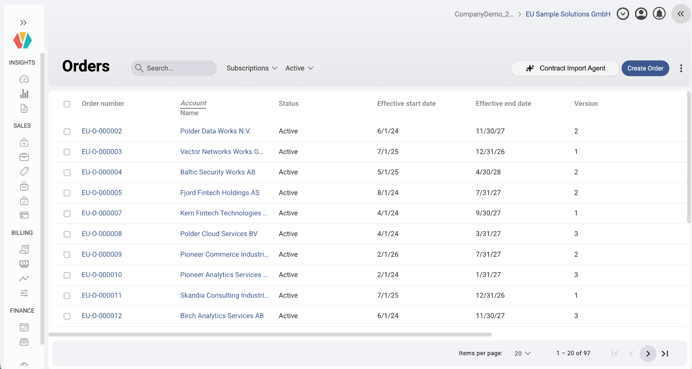
Image via Younium
Enable self-service renewals so users can adjust plans without waiting for your team. Risk detection improves as well. With AI in subscription management, you can identify at-risk renewals from your own contract data.
The platform handles the heavy lifting behind the scenes. With a complete audit trail, contract version history, and full multi-entity, multi-currency support, your renewal data stays accurate and ready for the finance team review.
|
How Can You Improve Your Subscription Renewal Rate? To keep your revenue steady, treat renewals as a year-round job instead of a last-minute rush. If you watch for warning signs early, consistently demonstrate your value, and use automation, you can significantly increase your subscription renewal rates. |
Also Read:
- Inaction Has an ROI — and It's Negative
- Subscription Management for B2B SaaS Companies: Latest Guide
FAQ
1. What is the ideal renewal rate for a B2B SaaS company?
Aim for roughly 91% gross revenue retention. Treat 100% of contracted revenue as the top-performer bar. On a customer-count basis, keeping 9 of 10 customers is the norm. Adjust the target for your contract size and segment.
2. What is the difference between subscription renewal rate and retention rate?
A subscription renewal rate measures the outcome of contracts that are due during a subscription period. A retention rate measures the number of customers retained across your existing customer base over time. Net revenue retention goes further. It adds expansion revenue to renewal revenue.
3. What is the renewal rate?
The renewal rate is the percentage of expiring subscriptions that a company retains at the end of their terms. You can count it by customers or contracted revenue.
4. How do you calculate subscription renewal rates?
To calculate renewal rates, divide the number of customers who renewed by the number due for renewal. Then, multiply by 100. For the subscription revenue view, divide renewed ARR by the ARR that was due. Count only contracts up for renewal in the period.
5. How do you control renewal rates using subscription data?
Subscription data flags at-risk accounts early. Instead of guessing, watch for red flags like dropping usage or stalled invoices. Score customer health based on these signals so you can step in and save at-risk customers before their contracts end.
Finally, review what worked after each cycle, and use a subscription management platform to keep everything in one place.
6. When should renewal conversations with customers start?
To retain customers, start renewal conversations 90 to 120 days before the renewal date for standard annual B2B SaaS contracts. Start planning enterprise and multi-year renewals even earlier. Early conversations leave time to fix problems, agree on terms, and clear the customer's internal approvals.
7. Does auto-renewal improve subscription renewal rates?
Yes, auto-renewal can boost renewal rates by preventing accidental cancellations. However, ensure that the clause and notice window are explicit, and remind customers before the window closes. A silent auto-renewal that surprises a CFO wins one term but loses the relationship.
8. What is the difference between gross and net revenue retention?
Gross revenue retention counts only the contracted revenue you keep, capped at 100%. Net revenue retention adds expansion from upsells and usage growth, so it can exceed 100%. Track GRR to judge renewal health and NRR to judge total account growth.
Wrapping Up
Improving subscription renewal rates comes down to managing the whole term. Spot risks early, prove value continuously, keep terms transparent, and make renewals easy.
Start where the leak is biggest. For some companies, that’s onboarding; for others, it’s contract hygiene or a missing playbook. The benchmarks show where the bar sits, and the metrics show whether you’re climbing.
The right platform makes the whole process stick. When renewals run on their own, your team has more time for critical conversations that require human intervention.
See how automated renewals, accurate invoicing, and renewal forecasting look on your contract data. Book a short demo with Younium.
What is the biggest roadblock your team faces during renewal season? Drop a comment below!