Credits in Younium: credit-based pricing from quote to ledger
Younium runs prepaid credits from quote to recognised revenue. Sell bundles, bill overage and recognise revenue on consumption.
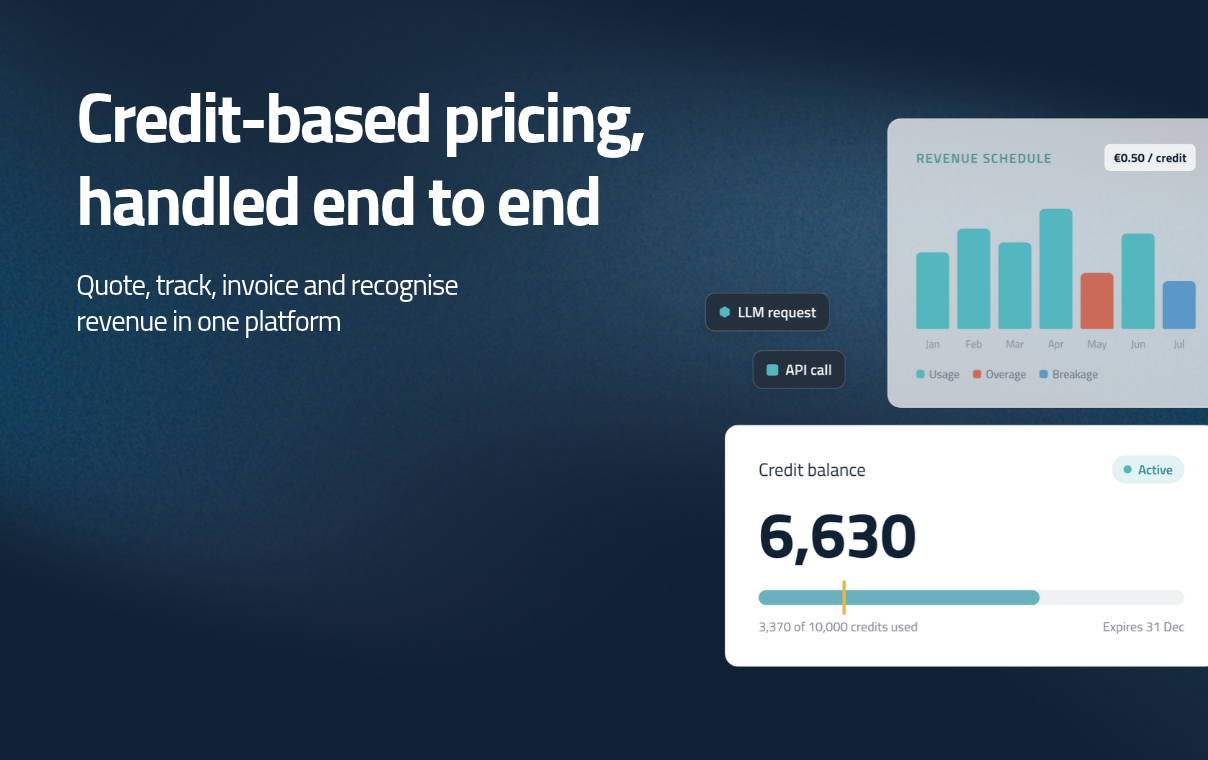
AI is changing how SaaS companies price. When every customer uses your product differently, and every LLM request has a real cost behind it, a flat seat price stops making sense.
More and more companies are moving to credits: customers buy a bundle up front, use it as they go and buy more when they need it. Customers like this model because they can start small and grow with usage. But for the teams running it, the hard part starts after the sale.
Where credit-based pricing breaks
Where credit-based pricing breaks Selling a credit bundle is simple. Everything that follows is not:
-
Balances have to be tracked as usage comes in, often across several types of action
-
Overage has to be billed correctly, from actual usage, not estimates
-
Unused credits expire, roll over or get refunded, depending on the contract
-
Finance has to recognise revenue as credits are consumed, and book breakage when they expire
-
Most CRMs and CPQs stop at the sale.
-
Most billing tools stop at the invoice.
So the gap gets filled with spreadsheets, manual journal entries or an in-house credit ledger that engineering has to build and maintain. Each hand-off adds risk, and finance carries most of it.
How Younium handles credits
With Credits in Younium, you can sell prepaid credits, draw them down as your customers use your product, bill what goes past the bundle and recognise the revenue as it’s consumed.
It runs on the same contracts, invoices and revenue schedules as your seat, usage, tiered and one-off pricing. One data model, from the quote to the general ledger.
How it works
-
Quote and order. Sell credits in Younium CPQ with per-credit, bundle, tiered or volume pricing, granted once or every month, quarter or year. Credits land on the order with their rules: expiry, rollover, overage and prices.
-
Invoice. Credits are invoiced like any other charge. When a balance runs out, you choose: flag it, or bill overage monthly in arrears.
-
Revenue. Revenue is deferred and recognised as credits are consumed, with breakage recognised at expiry and overage in the month of use. It's compliant with IFRS 15 and ASC 606.
What it means for your team
For finance: numbers you can trust.
Revenue recognition is built in, and the revenue schedule always lines up with the invoice. No reconciling across systems at month end.
For sales: sell and expand faster.
Quote every credit pricing option and turn quotes into orders automatically. Customers check their balance and top up in self-service, and your team sees live usage at upsell and renewal.
For product and engineering: stop building a credit engine.
Wallets, rate cards, expiry, rollover, top-ups and overage come out of the box. Report usage through the API and react to low-balance, expiry, top-up and overage events with webhooks.
From “can you bill this?” to “how should we price this?”
When the mechanics are handled, pricing becomes a strategy question again. You can launch a credit model for a new AI feature, test bundle sizes and adjust rate cards without a new engineering project or a new spreadsheet for finance.
Getting started
Already a Younium customer? If you’re on Accelerator or Enterprise, Credits is already part of your plan. Talk to your CSM to have it switched on. Your current usage charges and invoices stay as they are, and if you model credits with usage billing today, our team will help you move over.
New to Younium? See how Credits works or book a demo.