E-invoicing solves the format problem. Not the system problem.
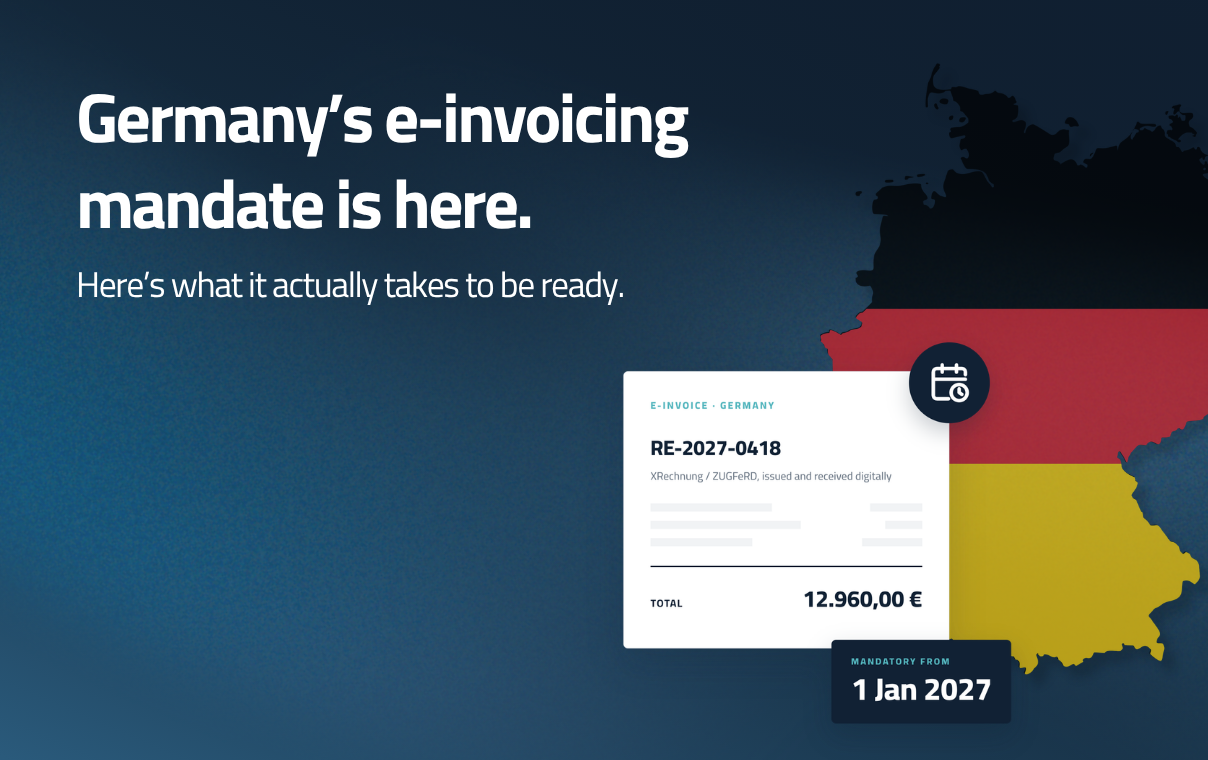
From January 2027, German B2B companies over €800k revenue must issue structured e-invoices. It's a good moment to look at more than just the invoice format.
TL;DR
- ZUGFeRD or XRechnung replace plain PDFs for larger B2B companies from January 2027; everyone else follows in 2028.
- Picking a compliant format is the easy part. The real question is whether your quote-to-cash data, across CPQ, contracts, and billing, is connected enough to produce that invoice correctly, every cycle.
- When that data lives in separate systems, it tends to drift out of sync, leaving finance teams unsure which number is actually correct before an invoice ever goes out.
- A bolt-on e-invoicing plugin can check the compliance box without fixing the disconnect between quoting, contracts, and billing underneath it.
- This is a natural moment to build billing infrastructure that scales with you, not just one that passes an audit.
- Younium supports ZUGFeRD and XRechnung natively, as part of the same platform that runs CPQ, billing, and revenue recognition.
Since January 2025, every business in Germany has had to be able to receive structured e-invoices. The next phase lands January 1, 2027: companies with prior-year revenue above €800,000 must start *issuing* them too, in ZUGFeRD or XRechnung rather than a plain PDF. The final phase, covering every remaining business, follows in January 2028.
That part is well documented. What gets less attention is what happens once the format itself is sorted.
The bigger question isn't the format
A compliant e-invoice is only as good as the data behind it. For a B2B SaaS company, an invoice sits in the middle of a longer chain: a deal in the CRM becomes a contract, a contract becomes a subscription, a subscription generates the charges that end up on the invoice, and those numbers still need to land correctly in the ERP. Those steps often live in separate systems, CRM in one place, billing in another, contract terms tracked somewhere else, ERP still another. A compliant invoice format doesn't close that gap. It just adds one more document to a process that was already disconnected.
That's the real opportunity in this regulation. The question isn't how to generate a compliant ZUGFeRD file. It's whether to use this required change as a reason to fix the parts feeding into it too. Companies that already have their quoting, contracts, and billing running through one system tend to find e-invoicing straightforward. Companies stitching those pieces together manually usually find that the invoice format was never really the hard part.
A few honest questions worth asking:
- Do quoting, contracts, and billing already live in one system, or are they reconciled manually before each invoice run?
- How much time each month goes into manually reconciling invoice data, or creating and validating invoices by hand?
- If you added a compliant e-invoice format tomorrow, would the data behind it actually be correct?
- Is this the kind of change you want to make once, properly, or patch now and revisit later?
Where Younium fits
Younium supports ZUGFeRD and XRechnung natively, as part of the same platform that runs CPQ, subscription billing, contract management, and revenue recognition for B2B SaaS companies. When a quote becomes a contract and a contract generates an invoice, the structured data is already there, it never left one system.
If you're looking at this as more than a format swap, reach out to Younium's subscription experts and we'll walk through your setup together.
FAQ
Q1. Does e-invoicing in Germany apply to all B2B companies from 2027?
Yes, if your prior-year revenue is above €800,000, you must issue structured e-invoices (XRechnung or ZUGFeRD) from January 1, 2027. Companies below that threshold follow from January 1, 2028.
Q2. Is a PDF invoice still valid in Germany after 2027?
Not for domestic B2B transactions once the mandate applies. Accepted formats are and ZUGFeRD and XRechnung
Q3. Can I just add e-invoicing to my existing billing tool?
Often, yes, in the sense that it can generate a compliant file. What that doesn't cover is getting the invoice delivered and accepted on the other end, whether over Peppol, email, or another channel agreed with your trading partner, or whether the quote, contract, and billing data behind it are structured and connected enough to produce it correctly and consistently, without manual work.
Q4. Does Younium support and ZUGFeRD and XRechnung?
Yes, natively, as part of the same platform that handles CPQ, subscription billing, contract management, and revenue recognition, not as a separate add-on.